.avif)

Ultimate Checklist for the Best Vinyl Siding Paint
.avif)

.svg)
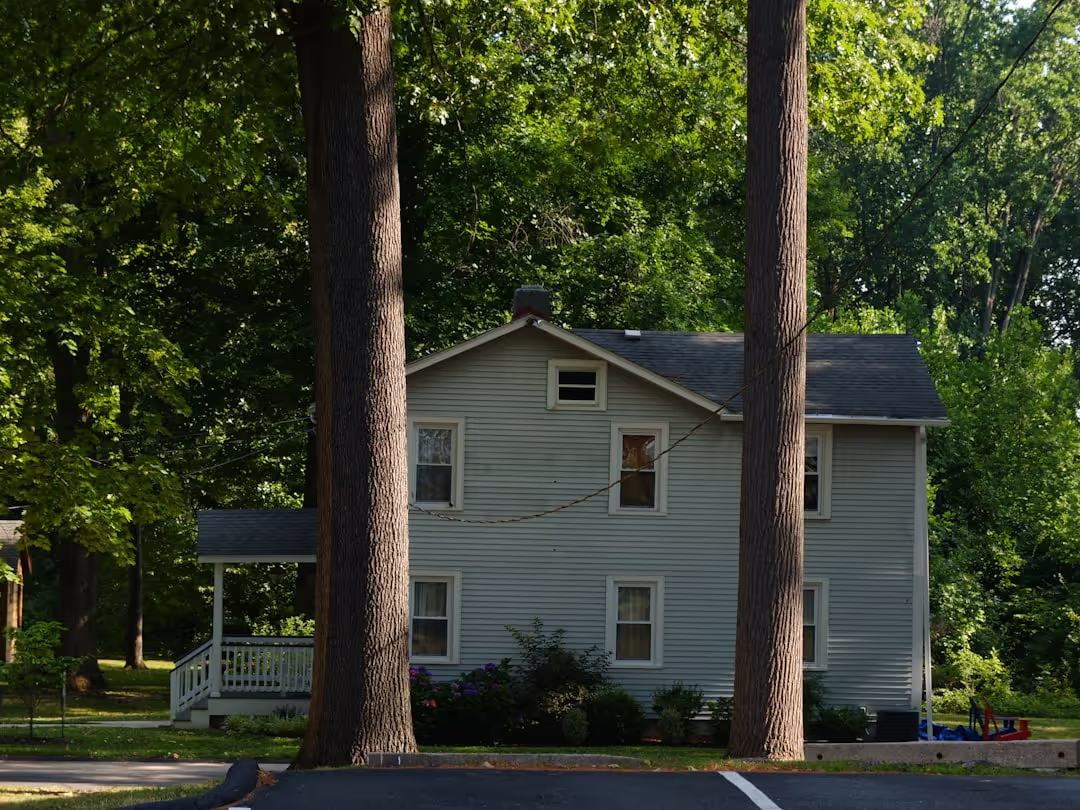
Exterior Paint for Vinyl Siding Starts With Heat-Safe Color Choices
Exterior paint for vinyl siding must be flexible, durable, and chosen with heat in mind. Yes, vinyl siding can be professionally painted, but the wrong color or coating can absorb too much sun, causing panels to expand, warp, or buckle.
For a safe, lasting result, professional painters should:
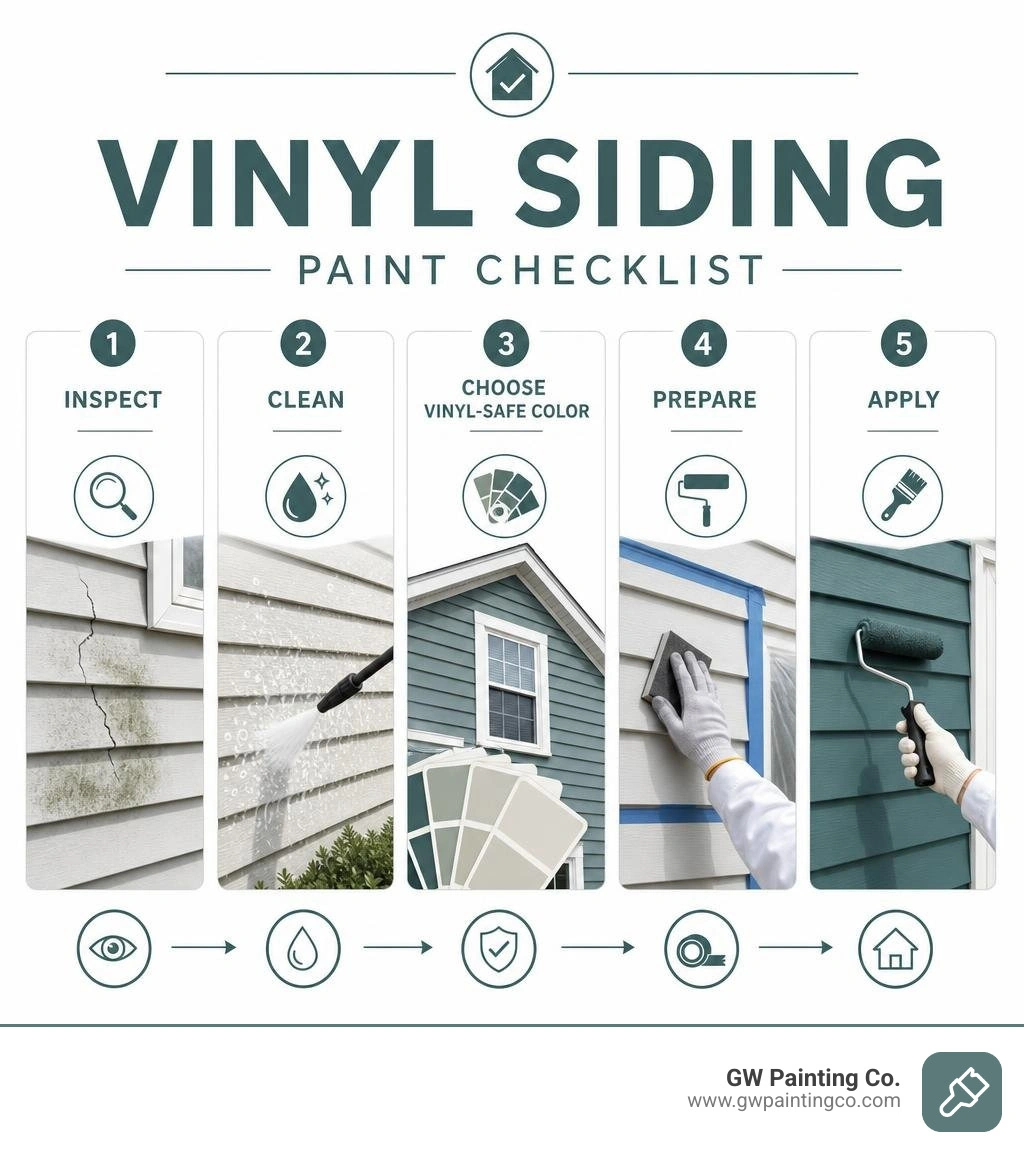
- Inspect the siding for damage, chalking, mildew, and loose panels.
- Use premium exterior acrylic paint made for vinyl-compatible surfaces.
- Select a vinyl-safe color that meets the siding manufacturer's heat and LRV requirements.
- Clean, prepare, and prime only where the siding's condition calls for it.
- Apply an even coating while protecting the expansion gaps that vinyl needs to move.
Vinyl is a common exterior material, representing 18% of homes in one 2026 facade-simulation dataset. It can make an older home look new again, but it moves significantly as temperatures change. A 12-foot panel can expand and contract by about one-half inch through a 100-degree temperature swing.
That is why color selection is more than a curb-appeal decision. On sunny south- and west-facing walls, a dark, low-reflectance paint can drive vinyl surface temperatures beyond the range where standard siding may distort. A professional painting team helps manage those risks through careful prep, compatible coatings, and a color plan that respects the siding itself.
Understanding Vinyl Siding Physics: The LRV Rule and Warping Risks
Painting vinyl lap siding is vastly different from painting wood, fiber cement, or masonry. Polyvinyl chloride (PVC) is an extruded substrate designed to float on wall fasteners rather than sit rigid. When solar radiation strikes an exterior wall, unpainted or light factory vinyl siding typically maintains a surface temperature between 130°F and 140°F in direct summer sunlight. However, applying a non-designated dark coating drastically increases solar energy absorption.
Standard residential vinyl siding has a heat distortion threshold of 165°F to 175°F. Once surface heat crosses this critical limit, the rigid PVC polymer softens. Because vinyl panels are interlocked at the top and bottom hem channels, softened panels pinned by thermal expansion cannot move laterally. The result is catastrophic buckling, permanent wave distortions, and sagging panels that require complete structural replacement.
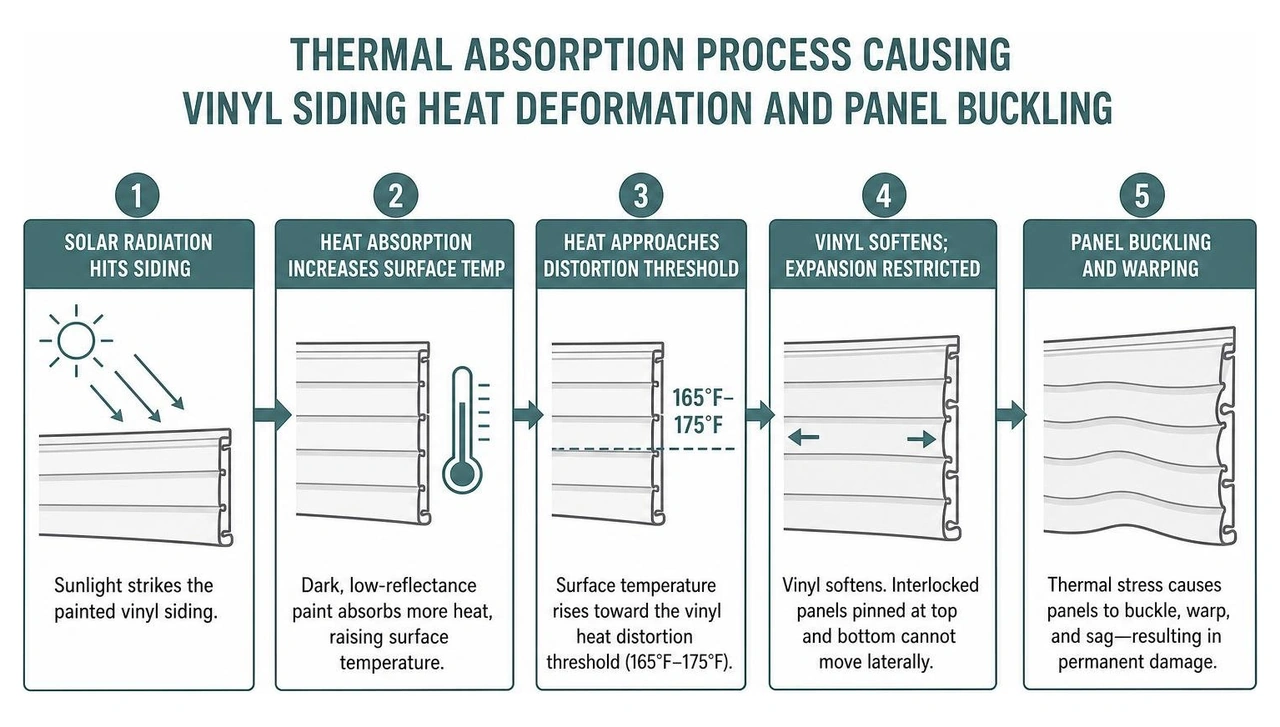
When our professional crews evaluate homes across Charlotte, NC, and surrounding areas like Concord and Waxhaw, we constantly analyze sun exposures. South- and west-facing walls receive intense thermal loads during summer afternoons. Dropping the Light Reflectance Value of your paint by even 10 points can push midday surface temperatures past 160°F. To protect your investment, ensuring your professional painting team understands the physics behind color selection is mandatory before starting any project. Learn more about structural exterior considerations in our Full Exterior Carpentry Painting Project breakdown.
The Science of Light Reflectance Value (LRV)
Light Reflectance Value (LRV) is a standard scale measuring the percentage of light and visible solar energy a paint color reflects. Pure black sits at an LRV of 0, absorbing all thermal energy, while pure white sits at an LRV of 100, reflecting all light.
For standard exterior paints, the traditional industry benchmark requires staying at an LRV of 55 or higher when painting vinyl siding. Factory original vinyl colors generally fall between an LRV of 55 and 80. As a baseline rule, a painted surface must never absorb more solar heat than the original factory shade.
However, modern coating technology has introduced specialized heat-reflective solar pigments. Paint manufacturers can now reformulate darker hues by replacing traditional organic carbon black pigments with complex inorganic pigments that reflect invisible infrared heat rays while retaining dark visual tones. To dive deeper into technical paint guidelines, review the How to Paint Vinyl Siding: The LRV Rule, Vinyl-Safe Paint, and Why Dark Colors Warp Panels — CompositePaint guide.
Siding Warranties and Color Change Limitations
A major concern for property owners in Fort Mill, SC, or Indian Land, SC, is preserving existing siding warranties. Siding manufacturers such as CertainTeed, Mastic, Royal, and Alside engineer their panels to handle specific thermal coefficients.
Painting existing vinyl siding generally alters original fade and color retention warranties from the siding manufacturer. However, structural warranties against manufacturing defects or hail cracking typically remain intact—provided the substrate was not damaged by an unapproved, heat-absorbing dark paint color. Applying a dark non-vinyl-safe paint shade voids structural failure warranties instantly because heat distortion is caused by improper coating selection rather than material defect.
When planning an exterior update, professional painters verify factory baselines. If homeowners are changing color palettes, staying equal to or lighter than the factory original shade guarantees full thermal compliance. For additional insights on matching home accents like entry doors, explore our Exterior Door Painting Complete Guide.
Choosing the Right Exterior Paint for Vinyl Siding: Coatings and Sheens

Choosing exterior paint for vinyl siding requires selecting materials specifically engineered to handle constant substrate expansion and contraction. Conventional oil-based or alkyd paints must never be applied to vinyl siding. Rigid oil coatings cure into a hard, non-yielding film that cannot stretch alongside expanding PVC panels, leading to widespread cracking, flaking, and severe adhesive failure within a single season.
Instead, premium vinyl siding coatings rely on 100% acrylic latex and urethane elastic polymers. These flexible binders allow topcoats to stretch across a 1/2-inch panel movement during extreme temperature swings without losing mechanical adhesion or cracking at the lap joints.
Key Features of Premium Exterior Paint for Vinyl Siding
When selecting commercial-grade coatings for residential siding projects, our professional painting teams look for specific architectural formulations:
- 100% Acrylic Resin Vehicle: Provides maximum flexibility, UV resistance, and long-term film integrity against sun exposure.
- Mildew Resistance & Antimicrobial Additives: Inhibits fungal spores, algae, and mildew growth in humid climates across Gastonia, NC, and Matthews, NC.
- Low-Temperature Curing: Formulations that allow smooth film formation and curing down to 35°F or 50°F ambient limits.
- Low-VOC & Non-Toxic Options: Advanced formulas, such as those featured on Exterior Vinyl Siding Paint | Free Shipping Over $200 | ECOS, offer zero-VOC performance without sacrificing exterior weather resistance.
- High-Hide Coverage: Superior pigment density that covers previous factory colors in fewer coats while maintaining film flexibility.
Leading commercial formulations engineered for vinyl lap siding include lines such as SUN-PROOF® Exterior Latex and GLIDDEN® TOTAL® Exterior Latex | Glidden. For engineered polymer substrates, contractors often utilize technology found in AZEK Trim & Siding with PaintPro Technology | AZEK Exteriors.
Selecting Color Options for Exterior Paint for Vinyl Siding
Selecting topcoat colors for vinyl requires strict adherence to manufacturer-certified palettes. Leading paint producers offer dedicated color collections explicitly tested for thermal expansion safety:
To learn more about how dark and light shades behave across different structural elements, read the technical rules in the SW VinylSafe Paint 2026: Exterior Guide (LRV 55+ Rule) . If homeowners are considering dark accent colors like charcoal or black, professional painters reserve those low-LRV shades strictly for non-vinyl trim elements, brickwork, or wood doors. Check out our comprehensive guides on Exterior Window Trim Painting Guide and Exterior Brick Painting Complete Guide for cohesive color planning.
Professional Surface Preparation and Application Standards
A high-performance acrylic topcoat will fail prematurely if applied over contaminated, chalking, or glossy vinyl panels. Professional surface preparation is the single most critical phase of painting vinyl siding.
Cleaning and Substrate Remediation
Over years of weather exposure, factory vinyl siding develops heavy chalking due to UV breakdown of the original PVC resin. Dust, organic matter, soot, and mildew also settle into the textured grain.
To prepare the siding properly, professional painters follow strict prep standards:
- The Chalk Wipe-Test: Professional crews perform a wipe-test using a clean microfiber cloth across south-facing elevations. If heavy white oxidation transfers to the cloth, deep chemical cleaning is required.
- Low-Pressure Washing (1,200 to 1,500 PSI): High-pressure washing can force water behind lap siding channels, saturating house wrap and framing. Professional teams use a wide 25-degree tip kept 18 inches off the wall, washing at a controlled 1,200 to 1,500 PSI.
- Biodegradable Cleaners & Mildewcides: A solution containing Tri-Sodium Phosphate (TSP) substitute and anti-fungal cleaner is applied to kill mold and strip surface oxidation.
- Substrate Drying Window: Panels must dry completely for 24 to 48 hours before applying any primer or topcoat. Trapping moisture inside J-channels guarantees coating blisters.
- No Sandpaper Abrasion: Sandpaper should never be used on vinyl siding. Sanding destroys the factory texture and creates visible scuff patterns. Instead, scuffing oxidized or glossy spots is handled with soft non-woven scrub pads.
If aged vinyl exhibits persistent chalking after washing, professional painters apply a specialized acrylic urethane bonding primer (such as INSL-X Stix or SW Extreme Bond) to seal oxidized particles. Clean, sound vinyl siding in good condition does not require a full prime coat; professional painters spot-prime only repaired or bare areas. Explore a real-world transformation in our Exterior Restoration Painting Project showcase.
Professional Application Techniques and Gap Preservation
Applying exterior paint for vinyl siding requires specialized spray and back-rolling techniques to ensure an even film thickness without locking panel joints.
- Airless Spraying and Back-Rolling: Professional painters apply topcoats using an airless sprayer fitted with a 0.015" to 0.017" spray tip at 1,600 to 1,800 PSI. A secondary painter immediately back-rolls the wet paint using a 3/8" to 1/2" synthetic nap roller. Back-rolling forces paint into the embossed grain, preventing premature gloss patchiness.
- Preserving Expansion Gaps: Vinyl lap siding requires room to slide horizontally inside J-channels, corner posts, and window casing receipts. Professional spray operators maintain proper angles so heavy paint does not bridge or glue J-channel gaps shut.
- Ideal Application Temperature: Painting must occur when surface temperatures range between 50°F and 85°F. Direct midday sunlight on south walls during peak summer heat can cause paint to flash-dry, creating lap marks and poor film formation.
Cost and Longevity of Professional Vinyl Siding Painting
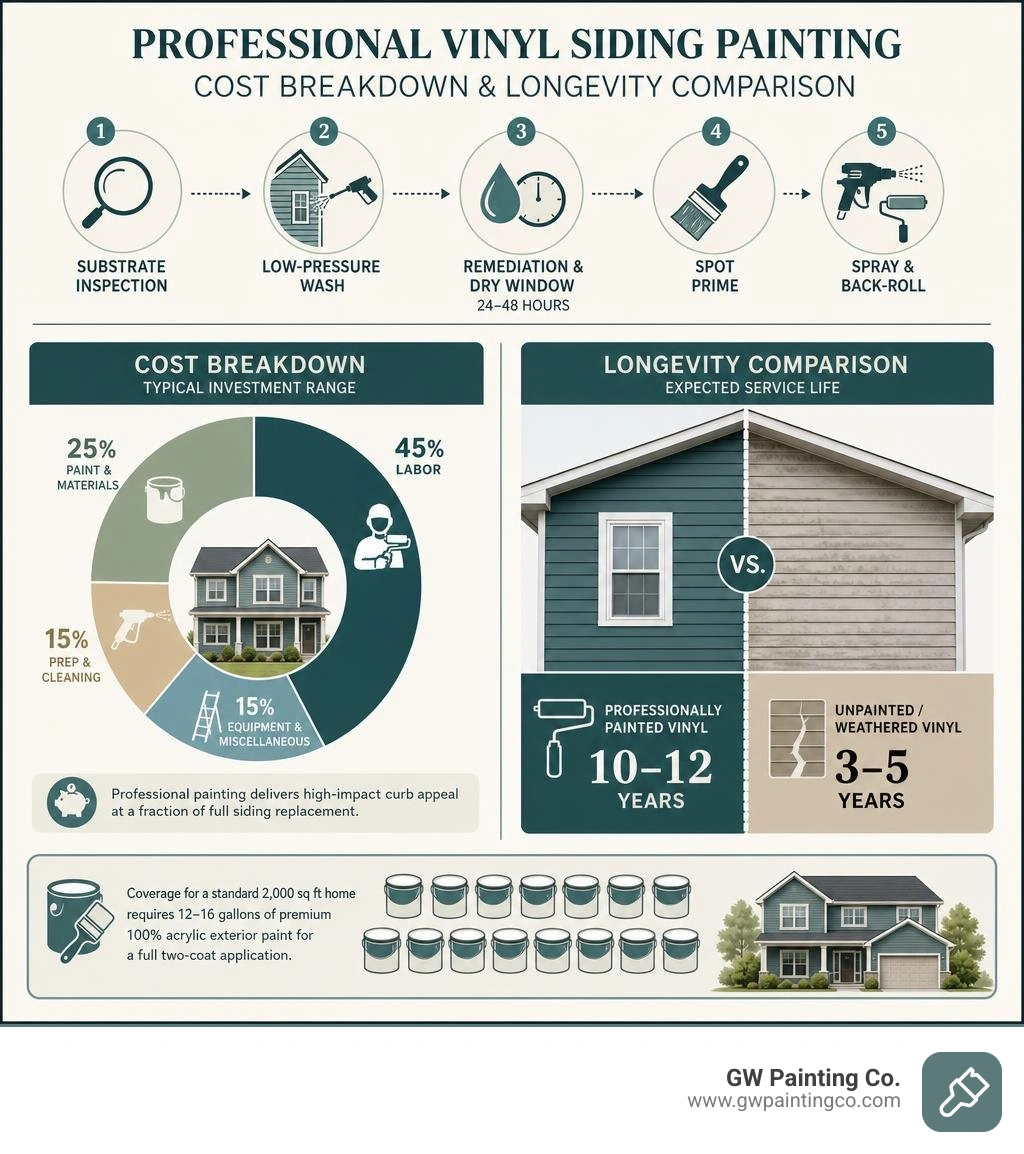
Investing in professional vinyl siding painting delivers an outstanding return on curb appeal compared to the high capital expense of complete siding teardown and replacement.
Coverage planning for a standard 2,000-square-foot vinyl home requires between 12 and 16 gallons of premium 100% acrylic exterior paint to complete a full two-coat application. A single-coat application is a false economy; two full topcoats are required to build the film thickness necessary for a 10- to 12-year coating lifespan.
When evaluated over a 10-year period, professionally painted vinyl siding maintains brilliant color depth, superior dirt resistance, and easy washability. The cost of our painting services varies depending on the size and scope of the project. We offer free estimates to provide you with an accurate quote tailored to your specific needs.
To better understand general regional investment ranges, view our detailed resources on Average Cost of Exterior Paint Job, Cost to Paint House Exterior, and the Average Cost of Exterior Painting Guide.
Frequently Asked Questions About Vinyl Siding Paint
Do professional painters need to prime vinyl siding before painting?
Clean, un-oxidized vinyl siding in sound condition does not require a full primer coat. Premium 100% acrylic latex topcoats adhere directly to clean PVC substrates. However, professional painters will apply a dedicated acrylic urethane bonding primer if the siding exhibits severe chalking, heavy oxidation after pressure washing, or if raw panel patches were exposed during substrate repairs.
What is the best sheen finish for vinyl siding?
Satin or low-lustre finishes are universally recommended for exterior vinyl siding. Satin sheens provide sufficient gloss to shed water, resist dirt accumulation, and allow easy washing, while hiding subtle surface imperfections and waves inherent in vinyl panels. Flat finishes tend to trap dirt and chalk rapidly, while semi-gloss or high-gloss sheens accentuate panel unevenness and telegraph minor wall flaws under direct sunlight.
How do dark paint colors cause vinyl siding panels to warp?
Dark paint colors absorb significantly more solar thermal radiation than lighter shades. Standard PVC siding distorts when its internal core temperature reaches 165°F to 175°F. In direct summer sun, a low-LRV dark paint can push vinyl surface temperatures past 170°F. Because vinyl lap panels expand end-to-end inside locked J-channels, thermal expansion forces the softened PVC to bow outward, creating permanent buckled waves across the home's siding.
Transform Your Vinyl Siding With GW Painting Co.
Repainting your home's exterior vinyl siding is one of the most effective ways to restore curb appeal, enhance weather protection, and update your home's aesthetic. However, avoiding costly thermal warping requires precise color selection, advanced coating technology, and flawless application.
At GW Painting Co., our professional teams bring extensive technical expertise, clean work sites, and complete dedication to quality craftsmanship across Charlotte, NC, Concord, NC, Fort Mill, SC, Indian Land, SC, Gastonia, NC, Matthews, NC, and Waxhaw, NC. Whether you are refreshing weathered siding or planning a complete modern update, our licensed and insured crews guarantee outstanding results.
Explore our local regional capabilities in the Exterior Painters Charlotte Guide, connect with our Exterior House Painters in Charlotte, or browse the Charlotte Exterior Painters Guide to learn more. When searching for a trusted Exterior Painting Company Near Me, look no further than our dedicated team.
Ready to revitalize your home's exterior safely? Schedule a professional exterior residential painting consultation with GW Painting Co. today to request your free, detailed project estimate!