.avif)

10 Easy Tips to Paint Your Exterior Door Like a Pro
.avif)

.svg)
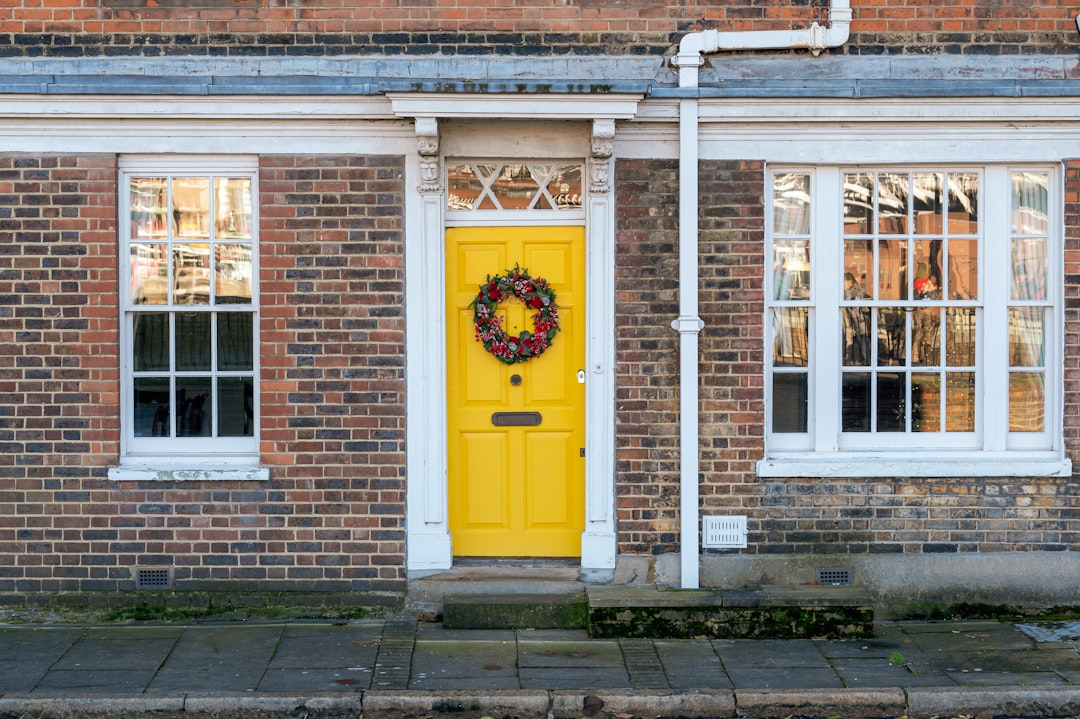
Elevate Your Entryway: The Power of Professional Exterior Door Painting
A beautifully done Exterior door painting can completely transform your home's curb appeal. It's the first thing guests see. A fresh, expertly applied coat of paint protects your door and enhances your home's entire look.
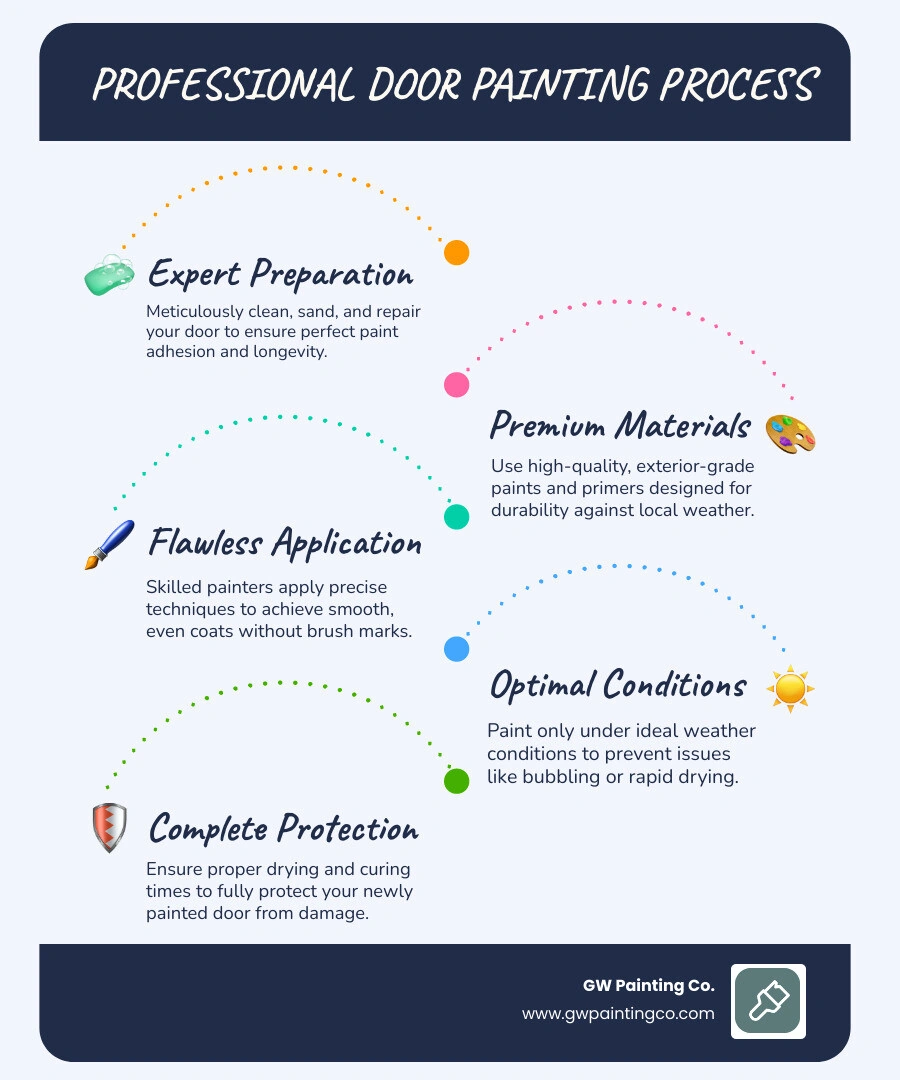
For Charlotte homeowners looking to understand the rigorous standards of professional front door painting, our process focuses on key areas:
- Expert Preparation: We meticulously clean, sand, and repair your door. This ensures paint adheres perfectly and lasts longer.
- Premium Materials: We select only high-quality, exterior-grade paints and primers. These are designed for durability against local weather.
- Flawless Application: Our skilled painters use precise techniques to achieve smooth, even coats. You won't see brush marks or uneven finishes.
- Optimal Conditions: We paint under ideal weather conditions. This prevents issues like bubbling or rapid drying.
- Complete Protection: We ensure proper drying and curing times. This protects your newly painted door from damage.
Your front door is a focal point. It sets the tone for your home. When you choose GW Painting Co., you're investing in a lasting first impression. We handle every step with care and precision.
Selecting the Best Materials for Exterior Door Painting
When we approach a project in the Charlotte or Concord area, we don't just grab whatever is on sale at the big-box store. Professional Exterior door painting requires industrial-grade materials that can withstand the North Carolina humidity and the intense South Carolina sun.
The two heavy hitters in the professional world are high-quality acrylic latex and specialized enamel paints.
- Acrylic Latex: This is the gold standard for most residential doors. It is incredibly flexible, which is vital because doors expand and contract with temperature changes. It’s also breathable, meaning it won't trap moisture that leads to rot.
- Exterior Enamels: For a harder, "factory-like" finish, we often turn to water-borne alkyd enamels. These provide the durability of old-school oil paints but with the easy cleanup and low VOCs of modern latex.
UV resistance is another non-negotiable factor. The sun in Indian Land and Fort Mill can be brutal. Without proper UV inhibitors, that beautiful deep navy or vibrant red will fade into a dull shadow of itself within two seasons. We utilize paints specifically formulated for weather protection to ensure the color stays as vivid as the day we packed up our ladders. You can find more details on achieving these long-lasting results in this Exterior door painting guide for stunning results that last.
Choosing the Right Sheen
The sheen—or the shininess of the paint—isn't just about looks; it’s about performance. In Exterior door painting, semi-gloss is the most popular choice for a reason. It offers a beautiful glow that highlights the door's architectural details while being incredibly easy to wipe down after a pollen-heavy spring in Gastonia.
| Sheen Level | Durability | Ease of Cleaning | Appearance |
|---|---|---|---|
| Satin | High | Good | Soft, pearl-like finish; hides minor imperfections well. |
| Semi-Gloss | Very High | Excellent | Noticeable shine; the professional standard for trim and doors. |
| High-Gloss | Maximum | Superior | Mirror-like finish; requires a perfectly smooth surface. |
While a high-gloss finish looks stunning on a historic home in Waxhaw, it is also the most unforgiving. It will highlight every tiny dent or grain in the wood. Our crews spend extra time on surface restoration if a client chooses high-gloss to ensure the result is "wow" and not "whoops."
Professional Preparation and Surface Restoration
If you ask any of our lead painters at GW Painting Co. what the most important part of the job is, they won't say "painting." They’ll say "prep." You can have the most expensive paint in the world, but if the surface isn't ready, the job will fail.

Our professional preparation process is exhaustive. First, we prefer to remove all hardware—knobs, deadbolts, and knockers. While some might try to tape around them, we find that removing them ensures a cleaner finish and prevents that "painted-on" look around the handle.
Next comes degreasing. Doors are touchpoints; they accumulate oils from hands, grime from the street, and waxes from old cleaners. We use professional-grade degreasers like Krud Kutter to strip away these contaminants. If we don't, the new paint will simply slide off the surface.
Sanding is where the magic happens. We don't just "scuff" the surface. We use a graduated sanding process:
- 120-Grit Sandpaper: We start here to level out old brush marks, drips from previous paint jobs, or minor scratches.
- 220-Grit Sandpaper: We finish with this fine grit to create a "mechanical tooth" for the new paint to bite into, resulting in a surface as smooth as glass.
Finally, we use a tack cloth—a specialized sticky cloth—to remove every single microscopic speck of dust. If you leave dust behind, it gets trapped in the paint, creating a gritty texture. For more on how we handle these details, check out our guide on Exterior Residential Painting.
Priming for Longevity
Is primer always necessary? In our professional opinion: almost always. Priming is the bridge between the old surface and the new beauty.
- Adhesion Primers: Essential for fiberglass or metal doors where standard paint struggles to stick.
- Stain Blocking: If we’re painting a wooden door that has knots or old tannins, a stain-blocking primer prevents those brown spots from bleeding through your new light-colored paint.
- Transitioning: If your door currently has an old oil-based paint and you want a modern water-based finish, a specialized "bridge" primer is required to prevent peeling.
We treat fiberglass and metal doors with specific chemical primers designed for those non-porous surfaces. This ensures that the Exterior door painting doesn't just look good for the photos—it looks good for the next decade.
Professional Techniques for a Flawless Finish
Applying paint to a door is an art form that requires professional precision. To achieve that "sprayed-on" look without the mess of a sprayer in a residential neighborhood, our pros use a combination of high-end brushes and specific rollers.
We typically use a 2-inch or 2.5-inch angled synthetic brush for the recessed areas and a 1/4” nap roller or a high-density foam roller for the flat sections. The 1/4" nap is the secret; it holds enough paint to cover well but doesn't leave behind a heavy "orange peel" texture.
One of our favorite "pro secrets" is the use of a paint conditioner like Floetrol. In the dry, breezy weather of Matthews or Concord, paint can dry too fast. Floetrol thins the paint slightly without diluting the color, allowing it to "level out" and erase brush marks before it sets. This helps us maintain a "wet edge," ensuring that each stroke blends seamlessly into the next.
Applying multiple thin coats is always better than one thick coat. Thick coats lead to drips, sags, and "alligatoring" (where the top dries faster than the bottom, causing cracks). For a deep dive into these professional standards, see Benjamin Moore’s advice on How to Paint a Front Door.
The Professional Methodology for Paneled Doors
There is a very specific "map" our teams follow when painting a paneled door. This sequence is designed to manage the drying time of the paint so we never overlap onto a section that has already started to set.
- Panel Edges: We start with the recessed "moldings" around the panels using an angled brush.
- Inner Panels: We immediately roll the flat center of the panels.
- Horizontal Rails: We paint the horizontal sections (top, middle, and bottom).
- Vertical Stiles: We paint the vertical sections, ending with the long outer edges.
- Door Edges: Finally, we handle the edges. A pro tip: the hinge edge usually matches the exterior color, while the latch edge matches the interior color!
Managing Environmental Factors and Drying Times
As we move through April 2026, the weather in the Carolinas is generally beautiful, but it can be tricky for Exterior door painting. We keep a close eye on the forecast for every project.
The optimal temperature range for painting is between 50°F and 85°F. If it’s too hot—which can happen even in April in Gastonia—the paint dries instantly, leaving ugly lap marks. If it’s too humid, the paint won't cure, leading to a "tacky" finish that sticks to the weatherstripping.
Direct sunlight is the enemy of a smooth finish. We always try to time our work so that we are painting in the shade. If the sun is beating down on a dark-colored door, the surface temperature can skyrocket, causing the paint to bubble.
Cure time is the most misunderstood part of the process. While paint might be "dry to the touch" in an hour, it takes much longer to "cure" (reach maximum hardness). We advise our clients to keep the door propped open as long as possible and to be extremely gentle with the hardware for the first 24 to 48 hours. Understanding these timelines is part of calculating the Average Cost of Exterior Paint Job, as professional service includes the time needed for proper stage-management of the environment.
Frequently Asked Questions about Exterior Door Painting
What is the best paint for exterior door painting?
For most homes in our service area, we recommend a high-quality 100% exterior acrylic latex paint. These formulas offer the best balance of UV resistance, moisture protection, and flexibility. For doors that receive heavy physical wear, a water-borne alkyd enamel is a fantastic choice for its rock-hard finish. We also ensure the paint has mildewcide additives, which are essential for the humid North Carolina climate.
How long does exterior door painting take to dry?
In typical Charlotte weather, the paint will be dry to the touch in 1–2 hours. However, we usually wait 4–6 hours before applying a second coat. The most critical timeframe is the "closing" window. We recommend waiting at least 8–12 hours before fully closing the door against weatherstripping, and 24 hours before reinstalling heavy hardware. Full curing can take 7 to 14 days, so no scrubbing the door right away!
Is priming necessary for every door?
While some modern paints are "self-priming," our professional standard is to use a dedicated primer in several scenarios:
- Bare Material: Any exposed wood, metal, or fiberglass requires a primer to seal the surface.
- Color Changes: Going from a dark color to a light color (or vice versa) requires a high-hide primer to ensure the new color looks accurate.
- Oil-to-Latex: If your home was built decades ago and has oil-based paint, a transition primer is mandatory to prevent the new paint from peeling off in sheets.
Conclusion
At GW Painting Co., we believe that Exterior door painting is one of the most impactful investments you can make in your home. Whether you are in Waxhaw, Indian Land, or downtown Charlotte, your front door is the "lipstick" of your home—it should be bold, beautiful, and perfectly applied.
As a locally-owned company, we take pride in serving our neighbors across North Carolina and South Carolina. Our crews are licensed, insured, and committed to a clean, respectful workspace. We don't just show up and slap on a coat of paint; we provide a satisfaction guarantee and professional results that stand the test of time.
The cost of our painting services varies depending on the size and scope of the project. We offer free estimates to provide you with an accurate quote tailored to your specific needs. Ready to give your entryway the professional touch it deserves? Contact us today to schedule your consultation and see why we are the top-rated choice for exterior painting in the Charlotte region.