.avif)

Beginner's Guide to House Painting Cost
.avif)

.svg)

Professional House Painting Cost Guide
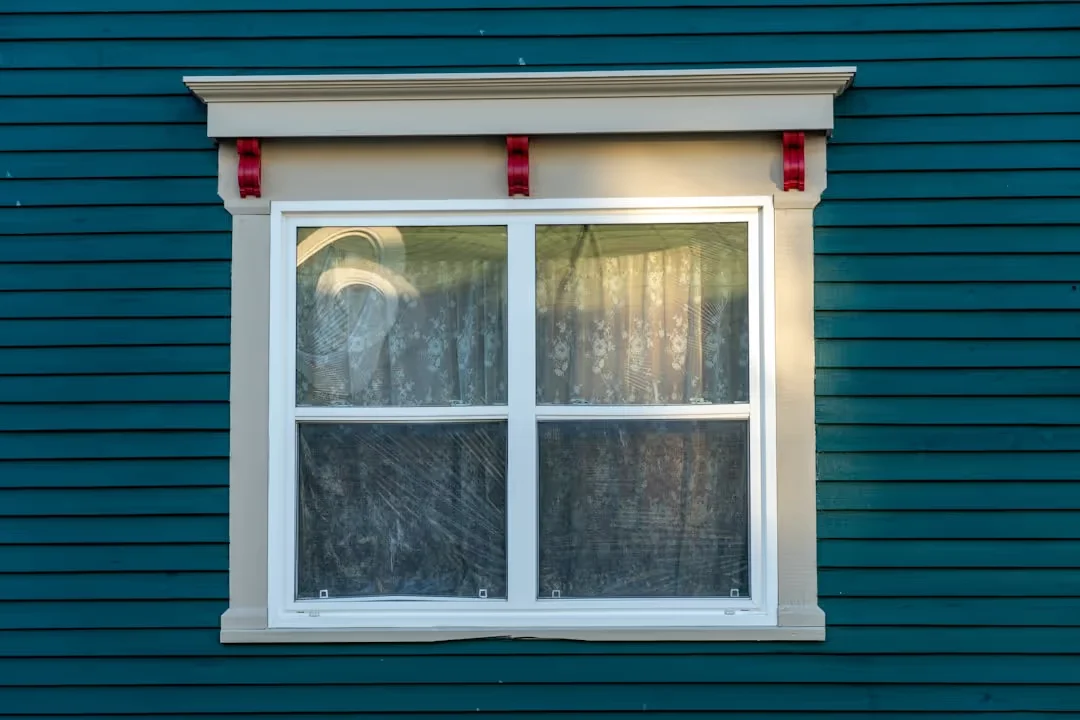
House painting cost is one of the first things homeowners want to know before hiring a professional painting service — and the answer depends on several key factors.
Here's a quick overview of typical professional painting costs:
| Project Type | Typical Cost Range |
|---|---|
| Single room (interior) | $371 – $1,011 |
| Whole home interior (avg.) | $5,401 – $24,282 |
| Whole home exterior (avg.) | $4,500 – $25,000+ |
| Exterior per square foot | $4.25 – $7.95 |
| Interior per square foot | $3.50 – $8.67 |
Costs vary based on home size, surface condition, paint quality, and local labor rates.
A fresh coat of paint is one of the most effective ways to protect your home and boost its curb appeal. But before you pick a color, it helps to understand what drives the price — so there are no surprises when the estimate arrives.
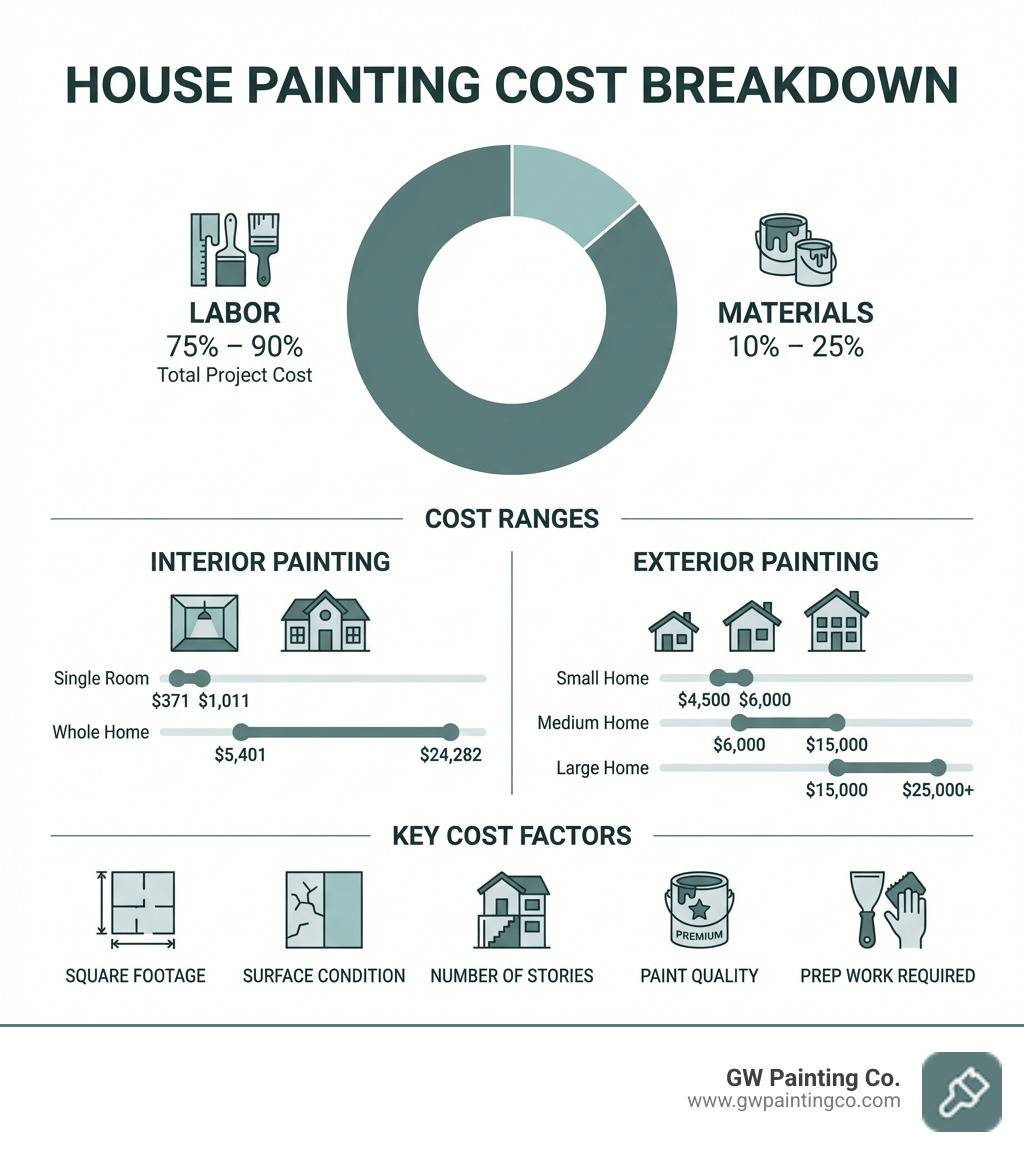
The good news? Most of the cost variation comes down to a handful of factors: the size of your home, the condition of your surfaces, and the quality of materials used. Labor alone typically makes up 75% to 90% of the total project cost, which is why choosing the right painting contractor matters as much as choosing the right paint.
At GW Painting Co., the cost of our painting services varies depending on the size and scope of the project. We offer free estimates to provide you with an accurate quote tailored to your specific needs.
Factors Influencing Professional Painting Estimates
When you receive a professional estimate, it isn't just a random number. It is a calculated figure based on the logistical realities of your specific property. Understanding these components helps you see the value behind the price.
Labor Rates and Expertise
As mentioned, labor is the heavyweight champion of your house painting cost. Professional painters don't just "slap on a coat of paint." You are paying for a team of skilled tradespeople who understand chemistry (how paint bonds to different surfaces), physics (how to safely navigate a 40-foot ladder), and artistry (clean lines and smooth finishes). Most professional labor rates range from $25 to $100 per hour per painter, or roughly $1 to $3.50 per square foot for standard applications.
Square Footage and Project Complexity
The total surface area is the most obvious driver of cost. A 1,500-square-foot ranch will naturally cost less than a 4,000-square-foot estate. However, complexity also plays a major role. Are there vaulted ceilings? Intricate crown molding? Built-in bookshelves? Each "extra" adds time to the clock. For instance, textured walls can require up to 50% more paint and significantly more labor than smooth drywall.
Surface Condition and Prep Work
If your walls are in perfect shape, we can get straight to the "fun part." But if there are cracks, holes, water damage, or peeling old paint, those must be addressed first. A high-quality finish is only as good as the surface beneath it. Professional crews often spend as much time (if not more) on preparation as they do on actual painting.
Number of Stories and Accessibility
Height equals risk and specialized equipment. If a crew needs to set up scaffolding or use a 60-foot boom lift to reach your gables, those costs will be reflected in the quote. Accessibility issues, such as steep slopes around the foundation or dense landscaping that must be protected, also impact the final tally. To ensure industry-standard accuracy, many professionals utilize Xactware’s pricing methodology, which provides data-driven insights into regional material and labor averages.
Average Interior House Painting Cost
Interior painting is a transformative investment that refreshes your daily living environment. On average, homeowners spend between $3.50 and $8.67 per square foot for a full interior project.
| Room Type/Size | Estimated Cost Range |
|---|---|
| Small Room (Up to 10' x 10') | $500 – $1,200 |
| Medium Room (12' x 12') | $800 – $1,800 |
| Large Room (15' x 20') | $1,200 – $2,500 |
| Average 2,000-2,500 sq. ft. Home | $7,000 – $25,500+ |
Several interior-specific factors will influence where you fall on this range:
- Wall Height: Standard 8-foot ceilings are the baseline. If you have 12-foot or "cathedral" ceilings, labor costs will increase due to the extra surface area and the need for taller ladders or specialized rollers.
- Ceilings and Trim: Don't forget the "fifth wall" and the woodwork. Adding ceilings, baseboards, window casings, and crown molding can add approximately $1.50 per square foot each to the base wall price.
- Number of Coats: While some high-end paints claim "one-coat coverage," professionals usually recommend two coats for durability and true color depth.
- Color Changes: Going from a dark navy to a light cream? That will likely require a high-quality primer plus extra coats of paint, which impacts the paint cost per room.
Estimating Exterior House Painting Cost
The exterior of your home is its first line of defense against the elements. A professional exterior paint job typically costs between $4,500 and $25,000+, depending on the home's size and architecture.
According to national average exterior project data, the material of your siding is one of the biggest cost variables. Some materials are "thirstier" than others:
- Wood and Stucco: These are porous materials that soak up paint. Stucco, in particular, often requires 50% more paint than smoother surfaces due to its texture.
- Brick and Stone: While beautiful, painting brick is a labor-intensive process that requires specialized primers and sealants to prevent moisture from getting trapped.
- Vinyl and Aluminum: These are often the most cost-effective to paint, as they are non-porous and generally require less prep work than wood.
Architectural details like shutters, ornate window casings, and gutters also add to the labor. Many homeowners choose to invest in Benjamin Moore’s Aura premium exterior options for these projects. While the upfront material cost is higher, the superior UV resistance and "Color Lock" technology mean you won't have to repaint as often, saving you thousands in the long run.
The Value of Professional Prep and Quality Materials
It is tempting to look at a "budget" quote and think you are getting a deal. However, in the painting world, you truly get what you pay for. The difference between a $4,000 quote and a $7,000 quote often lies in the invisible work—the prep.
The Power of Preparation
A professional prep checklist includes:
- Power Washing: Removing dirt, mildew, and chalking paint from the exterior.
- Scraping and Sanding: Removing loose flakes and smoothing the surface so the new paint can bond.
- Caulking: Filling gaps around windows and doors to prevent moisture intrusion.
- Priming: Essential for raw wood, repairs, or significant color changes.
- Wood Rot Repair: Addressing hidden damage before it's covered up.
If these steps are skipped, even the most expensive paint in the world will bubble, peel, or chip within a year.
Choosing the Right Paint
Materials only make up 10-25% of the total house painting cost, so "skimping" on paint quality only saves you a few hundred dollars while potentially sacrificing years of durability. We often recommend Sherwin-Williams’ Emerald Rain Refresh technology for exteriors. This self-cleaning formula sheds dirt upon contact with rain, keeping your home looking freshly painted for much longer.
Inside the home, different gloss levels (sheens) affect both the look and the price. High-gloss enamels are more expensive but offer the stain resistance needed for kitchens and bathrooms. Flat or matte finishes are more affordable and great for hiding imperfections in low-traffic areas like ceilings.
Regional Pricing: House Painting Cost in Charlotte, NC
Local factors play a huge role in your estimate. If you live in Charlotte, NC, or surrounding areas like Concord, Fort Mill, or Waxhaw, you face unique environmental challenges.
The Charlotte Factor
Our region is known for high humidity and varying weather conditions. For exterior projects, this means we must be meticulous with moisture testing. Painting over damp wood or in 90% humidity is a recipe for failure. This expertise is part of the comprehensive Charlotte cost guide that local homeowners should consider.
Common Siding in the Carolinas
Charlotte architecture features a lot of brick and stucco. As we discussed, these materials require more specialized labor and higher paint volumes. If you have a classic "Charlotte brick" home, your house painting cost in Charlotte NC will likely be higher than a vinyl-sided home of the same size, but the result can dramatically modernize your home's aesthetic.
The local labor market also influences pricing. In high-growth areas like Matthews and Gastonia, demand for quality contractors is high. Booking during the "off-season" (typically winter for interior projects) can sometimes lead to better scheduling flexibility.
Frequently Asked Questions about House Painting Cost
How much does it cost to paint a 2,000 sq. ft. house?
For a 2,000 sq. ft. home, the interior painting cost typically ranges from $9,000 to $15,000, depending on whether you include ceilings and trim. For the exterior, a medium-sized home of this square footage usually costs between $4,500 and $9,000. These ranges account for professional labor, high-quality materials, and standard prep work.
Does the type of siding affect the exterior painting price?
Absolutely. Porous materials like stucco and brick require more paint and specialized primers. Heavily textured stucco can require 50% more paint than smooth wood siding. Conversely, vinyl is often the most affordable to paint because it requires less intensive preparation and absorbs less material.
Why is labor the largest part of a painting estimate?
Labor accounts for 75% to 90% of the cost because professional painting is a time-intensive, manual craft. A quality job requires hours of cleaning, sanding, caulking, and masking before a single drop of paint is applied. You are also paying for the contractor's insurance, high-end equipment (sprayers, lifts, scaffolding), and the expertise to handle complex architectural features safely.
Conclusion
Understanding the house painting cost is the first step toward a successful home transformation. While the numbers can vary based on size, condition, and location, the value of a professional job is undeniable. A high-quality paint job doesn't just look better; it lasts longer, protects your structural investment, and provides peace of mind.
At GW Painting Co., we take pride in serving our neighbors across Charlotte, NC, Concord, Fort Mill, and beyond. We are a top-rated, locally-owned residential painting company committed to quality craftsmanship and exceptional customer service. Our crews are licensed, insured, and respectful of your home, and we back all our work with a satisfaction guarantee.
Ready to see exactly what your project will cost? We would love to help. Schedule your professional painting estimate today and let us provide you with a transparent, accurate quote tailored to your specific needs.