.avif)

How to Choose a Concord House Painting Company That Won't Mess Up
.avif)

.svg)

Key Standards Every Concord House Painting Company Must Meet
To choose the right Concord house painting company, homeowners should verify direct proof of general liability and workers' compensation insurance, check for EPA Lead-Safe certification, demand a written multi-step prep scope, and confirm proven local project experience. Taking time to review practical tips for hiring professional painters ensures you partner with a disciplined team capable of delivering durable exterior protection.
| Evaluation Standard | Qualified Professional Contractor | Unlicensed or Casual Crew |
|---|---|---|
| Licensing & Registration | Registered contractor, EPA RRP certified | Often unregistered or operating without proper trade verification |
| Insurance Protection | Full commercial general liability and active workers' compensation | Limited coverage or none, shifting injury liability to the homeowner |
| Written Scope of Work | Detailed prep steps, primer types, finish coats, and brand specifications | Vague verbal estimates without specified prep protocols or paint lines |
| Surface Preparation | Complete scrape, feather-sand, spot-prime, caulking, and wood repair | Quick power-wash and single topcoat over unstable layers |
| Historic Knowledge | Proven experience navigating neighborhood palettes and exterior profiles | Generic application methods that can damage aged wood substrate |
| Warranty & Follow-Through | Multi-year craftsmanship warranty with written terms | Verbal guarantees with little post-completion accountability |
A transparent contractor provides clear contracts that outline every phase of the project, including brand names, exact product lines, dry-film thicknesses, and daily site management plans.
Before signing, compare proposals line by line rather than choosing solely on the lowest total. A dependable estimate identifies the areas to be painted, repair allowances, the preparation sequence, primer and finish products, number of coats, access requirements, cleanup procedures, warranty terms, and exclusions. It should also state who will supervise the work and how change orders will be approved if hidden rot or failed glazing is discovered.
Ask each contractor how they document the condition of the home before work begins, protect landscaping and hard surfaces, and handle daily cleanup. Clear answers reduce surprises and make it easier to compare competing bids on the same scope of work.
Essential Credentials for a Concord House Painting Company
Verifying contractor credentials protects homeowners from property damage and legal liabilities. When vetting licensed and insured painters, ask for direct certificates of insurance sent straight from the underwriter rather than photocopied cards.
A qualified contractor must carry:
- State and Local Contractor Licensing: Ensures compliance with North Carolina contractor standards and local municipal requirements.
- Comprehensive General Liability Insurance: Covers accidental damage to siding, landscaping, architectural glass, or surrounding structures during staging and painting.
- Workers' Compensation Coverage: Protects property owners from financial liability if an operative sustains an injury on site.
- EPA Lead-Safe Certification (RRP): Mandatory for working on structures built prior to 1978 under the EPA Lead-Safe Certification guidelines. Certified painters use HEPA-filtered shrouds, plastic containment zones, and wet-scraping techniques to capture paint debris safely.
Portfolio Requirements for a Concord House Painting Company
Residential architecture throughout Concord and Cabarrus County requires specialized skill. Consulting a thorough guide to hiring house painters highlights the importance of matching a contractor's specific portfolio with your property's architectural style.
When evaluating previous work on historic and established homes, look for:
- Extensive Clapboard and Shingle Work: Evidence of smooth feathering between old paint layers and bare wood without gouging the original lumber.
- Window Glazing and Detail Preservation: High-resolution photos showing clean cutlines on multi-pane divided-light sashes and intact historic moldings.
- Local References in Surrounding Communities: Established trade experience across neighboring areas such as Kannapolis, Harrisburg, and Charlotte.
- Transparent Case Studies: Documented prep phases that reveal the condition of the substrate before the final topcoats were applied.
Questions to Ask Before Hiring
Use the consultation to test how clearly a contractor can explain the job. Useful questions include:
- Which prep steps are included for peeling paint, failed caulk, and minor wood deterioration?
- Which primer and finish systems are recommended for this home's siding and trim, and why?
- Can the company provide recent local references for homes with similar age, materials, or architectural details?
- Who will be on site each day, and who is the point of contact for updates or concerns?
- What circumstances can change the written scope or final price, and how will approval be documented?
A professional painting company should welcome these questions and give specific, consistent answers rather than relying on broad promises.
Evaluating Exterior Prep Work and Climate Durability
Piedmont North Carolina weather places severe stress on exterior coatings. Between hot, humid summer stretches and winter freeze-thaw cycles, moisture regularly penetrates compromised wood fibers. Choosing a reputable exterior painting company ensures the prep process is designed specifically to withstand regional climate extremes.
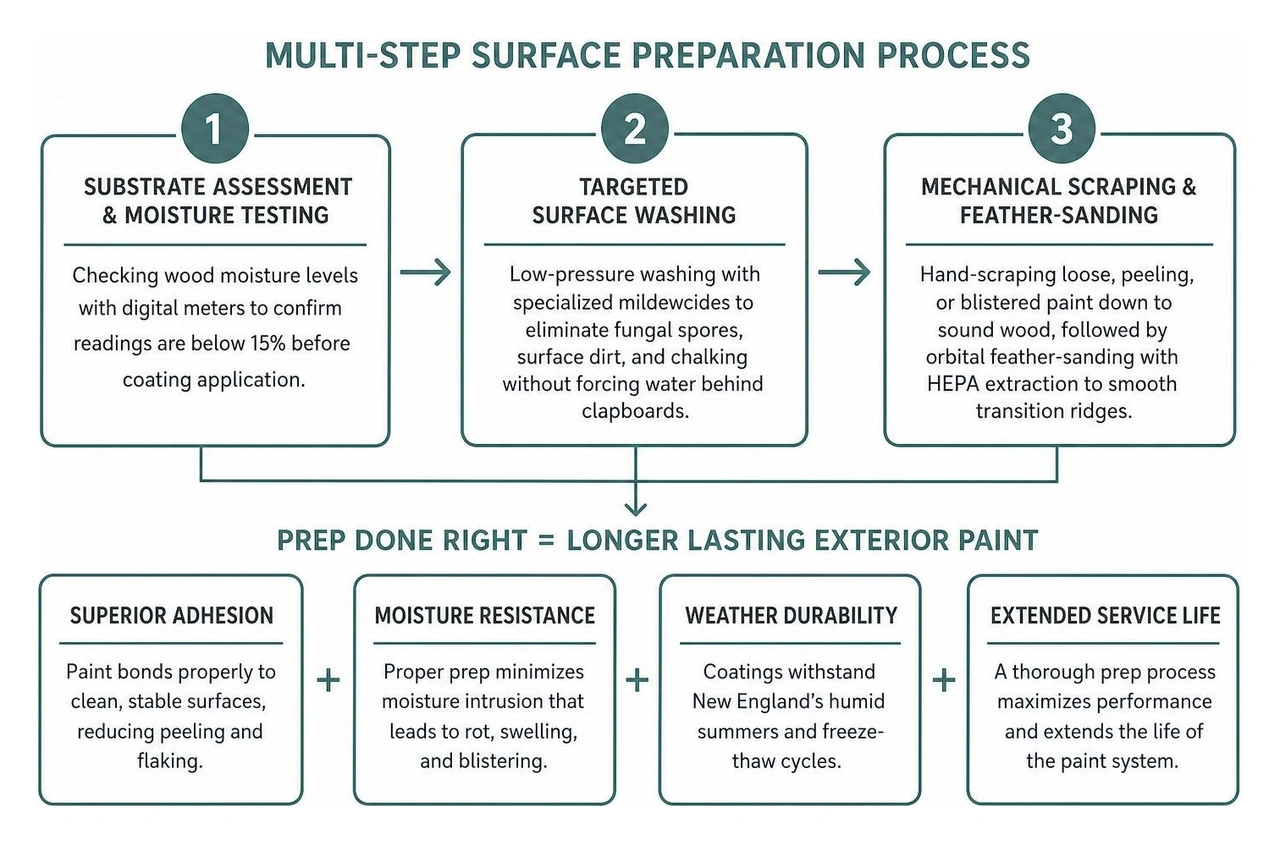
The Step-by-Step Historic Surface Prep Workflow
- Substrate Assessment & Moisture Testing: Checking wood moisture levels with digital meters to confirm readings are below 15% before coating application.
- Targeted Surface Washing: Low-pressure washing with specialized mildewcides to eliminate fungal spores, surface dirt, and chalking without forcing water behind clapboards.
- Mechanical Scraping & Feather-Sanding: Hand-scraping loose, peeling, or blistered paint down to sound wood, followed by orbital feather-sanding with HEPA extraction to smooth transition ridges.
- Epoxy Wood Repair & Stabilization: Treating minor soft spots with penetrating wood hardeners and rebuilding deteriorated profiles with two-part exterior architectural epoxy.
- Specialty Priming: Applying premium slow-drying oil or high-adhesion acrylic exterior primers on bare wood to seal tannins, prevent resin bleed, and establish a firm bonding bridge.
- Elastomeric Joint Caulking: Sealing corner boards, window casing perimeters, and fascia seams with high-movement elastomeric sealants, intentionally leaving the bottom edges of lap siding open so the house can breathe.
Preventing Common Paint Failures
- Peeling from Moisture Intrusion: Occurs when interior vapor or exterior water gets behind siding. Handled by priming back edges when siding is replaced, re-caulking vertical joints, and maintaining proper building ventilation.
- North-Facing Mildew and Algae Growth: Shaded elevations stay damp longer. Prevented by using high-grade acrylic coatings formulated with advanced antimicrobial agents.
- Chalking from UV Degradation: Extreme sun breaks down cheap paint binders over time. Addressed by applying 100% acrylic latex finishes with UV-resistant resin packages.
Why Moisture Management Matters
Exterior paint is only as durable as the surface beneath it. Before coating, experienced painters look for failed flashing, open joints, leaking gutters, ground contact, and vegetation that keeps siding damp. These conditions can cause recurring blistering or peeling even when premium paint is used.
A thorough evaluation separates cosmetic paint failure from an active moisture problem. When repairs are needed, they should be addressed before priming and painting so the new coating system has a dry, stable surface to bond to. This approach is especially important for older wood exteriors, where repeated wetting can damage boards, trim, and window details over time.
Product Selection for Local Conditions
The right coating system depends on the substrate, prior paint layers, exposure, and surrounding conditions. South- and west-facing elevations often need strong UV resistance, while shaded elevations may need careful cleaning and coatings suited to moisture-prone areas. A qualified contractor can explain why a particular primer, caulk, and topcoat system fits the house instead of applying the same products to every surface.
Sheen Selection, Color Consultations, and Historic Guidelines

Selecting exterior colors in historic areas involves balancing local district guidelines with personal design preferences. Historic commissions often recommend period-accurate palettes, including classic colonial whites, deep heritage greens, historic ochres, muted slate grays, and rich iron oxides.
Professional color consultations help homeowners sample shades under changing daylight conditions:
- Siding Sheen Selection (Satin or Low-Sheen): High-grade 100% acrylic latex in satin or low-sheen is ideal for exterior body clapboards and shingles. It provides sufficient washability and moisture resistance while hiding subtle surface imperfections common in older wood.
- Trim and Architectural Details (Semi-Gloss): Semi-gloss finishes are preferred for window sashes, corner boards, decorative brackets, porticos, and exterior doors. The higher sheen highlights intricate craftsmanship, sheds rain effectively, and resists physical wear.
- Masonry and Foundation Coatings: Mineral silicate or breathable acrylic masonry paints allow internal moisture vapor to escape without popping the finish off historic brick or stone foundations.
Choosing Colors That Work With the Home
A color consultation should consider more than a paint-chip sample. The home’s roof color, brick or stone, fixed metal finishes, mature landscaping, and neighboring architecture can all change how a color reads outdoors. Testing large samples on multiple elevations helps reveal undertones in morning light, direct afternoon sun, and shade.
For historic or character-rich homes, a restrained palette can emphasize original details without making the exterior feel flat. A painter with local experience can help homeowners decide where to place body, trim, shutter, and door colors so the finished scheme highlights the architecture and remains cohesive from the street.
When a neighborhood or historic district has review requirements, confirm any color restrictions before materials are ordered. That simple step helps prevent avoidable delays and keeps the project moving once surface preparation is complete.
Project Timelines, Pricing Factors, and Long-Term Maintenance
Evaluating quotes requires understanding the operational factors that influence timelines and costs. When researching the overall cost to paint a house exterior or reviewing the average cost of an exterior paint job, consider how specific property conditions shape labor requirements.
The cost of our painting services varies depending on the size and scope of the project. We offer free estimates to provide you with an accurate quote tailored to your specific needs.
Key Factors Influencing Exterior Painting Timelines
A standard residential exterior project typically takes 5 to 10 active workdays, depending on several distinct elements:
- Home Scale and Story Count: Multi-story structures requiring complex staging, ladder jacks, or aerial lifts take longer to prep and coat safely.
- Substrate Condition: A home with severe peeling or underlying wood rot requires significantly more labor hours during the prep phase than a sound structure needing a maintenance coat.
- Architectural Complexity: Intricate Victorian trim, dentil moldings, divided-light sashes, and multi-color palettes require precise hand brushing rather than rapid field application.
- Weather Conditions: Painting is restricted to dry days when temperatures consistently remain above 50°F and relative humidity is below 85% to ensure proper film formation.
Routine Maintenance for Paint Longevity
To protect your exterior investment and extend the coating life to 8–10 years or more:
- Annual Gentle Soft Washing: Arrange for exterior siding to be washed annually using low pressure and a mild, biodegradable cleaner to eliminate airborne contaminants, pollen, and mildew spores.
- Fall Sealant Audits: Have professional painters inspect caulked joints around door frames, window sills, and corner boards each autumn before freezing weather sets in to reseal open seams.
- Vegetation Management: Keep shrubs, trees, and garden plantings trimmed at least 18 to 24 inches away from siding to promote adequate air circulation and prevent damp shading.
How to Compare Exterior Painting Estimates
Comparable estimates describe comparable work. If one proposal includes extensive scraping, spot priming, carpentry repairs, caulking, two finish coats, and protection for landscaping while another simply lists "paint exterior," the totals do not represent the same service. Review the preparation detail first, then compare products, crew supervision, warranty coverage, scheduling assumptions, and cleanup responsibilities.
Be cautious of unusually low quotes that omit product names, exclude necessary repairs without explaining the process, or provide no written warranty terms. The better value is typically the proposal that defines the work clearly and addresses the conditions most likely to shorten the life of the finish.
Planning for a Smooth Project
Homeowners can help the crew work efficiently by clearing access around exterior walls, moving patio furniture and fragile décor, trimming back vegetation where practical, and discussing pets, gates, parking, and daily arrival expectations before the start date. A clear pre-project walkthrough aligns the scope, confirms colors, and creates a record of any areas needing special attention.
Frequently Asked Questions About Hiring Local Painters
How long does a full exterior paint job take on an older home?
Most exterior residential repainting projects take between 5 and 10 workdays. Older properties with extensive scraping, carpentry repairs, or multi-story access requirements may need additional time to ensure thorough preparation and dry-time between coats.
What paint finishes provide the best protection against freezing winters and humid summers?
A premium 100% acrylic latex in a satin or low-sheen finish delivers the best durability for wood and composite siding. It remains flexible throughout seasonal temperature swings, allowing the coating to expand and contract without cracking, while semi-gloss finishes provide durable moisture resistance on trim and doors.
What specific prep work prevents paint peeling on historic wood siding?
Preventing peeling requires thorough mechanical scraping, feather-sanding all paint transition edges, and applying a high-bonding, slow-curing exterior primer over bare lumber. Rebuilding deteriorated wood with two-part epoxies and sealing joints with elastomeric caulk prevents water from penetrating the substrate.
Should a painting contractor provide a written warranty?
Yes. A written workmanship warranty should explain what is covered, how long coverage lasts, what conditions may be excluded, and how to request service if a covered issue appears. It should be considered alongside the paint manufacturer’s product warranty, which is separate from the contractor’s responsibility for preparation and application.
What should be included in an exterior painting contract?
A strong contract identifies the surfaces to be painted, preparation and repair steps, product lines, color selections, coat counts, access needs, payment schedule, cleanup expectations, warranty terms, and the process for approving changes. Written detail protects both the homeowner and the contractor by establishing the same expectations before work begins.
Conclusion
Choosing a Concord house painting company requires careful contractor screening, proven surface preparation, and a paint system suited to the home’s materials and exposure. The strongest results come from a documented scope, qualified crews, transparent communication, and durable products applied to a clean, sound substrate. Working with an experienced team helps ensure that every stage, from inspection and repairs to priming and final coats, is completed with precision and care. When planning updates for your living spaces alongside exterior improvements, our specialized interior residential painting services provide the same clean, detailed craftsmanship inside your home. Contact GW Painting Co. today to request a free, detailed estimate tailored to your project.