.avif)

Budgeting for Beauty: Your 2025 Guide to Exterior Paint Prices
.avif)

.svg)
Why Understanding Exterior Paint Costs Matters for Your Home Investment
The cost to paint house exterior ranges from $5,000 to $15,000 for most homes in 2025, with the national average at $7,582 for a 2,500-square-foot, two-story home. Here's a quick breakdown:
- Small homes (1,000-1,500 sq ft): $3,000 - $6,000
- Medium homes (1,500-2,500 sq ft): $4,500 - $9,000
- Large homes (2,500+ sq ft): $8,000 - $15,000
- Cost per square foot: $2.34 - $3.72
As one homeowner shared: "I am just curious. I am in the twin cities area and I just paid about 4000 to paint the all the siding of my 1600 Sq ft split level house (half it it is 2 stories) . This included all the prep work of filling in holes etc. and was 2 coats of pretty good quality paint."
Your home's exterior paint is more than cosmetic—it's your first line of defense against weather, moisture, and UV damage. When it fails, you're not just facing a cosmetic issue but potential wood rot, siding damage, and costly structural repairs.
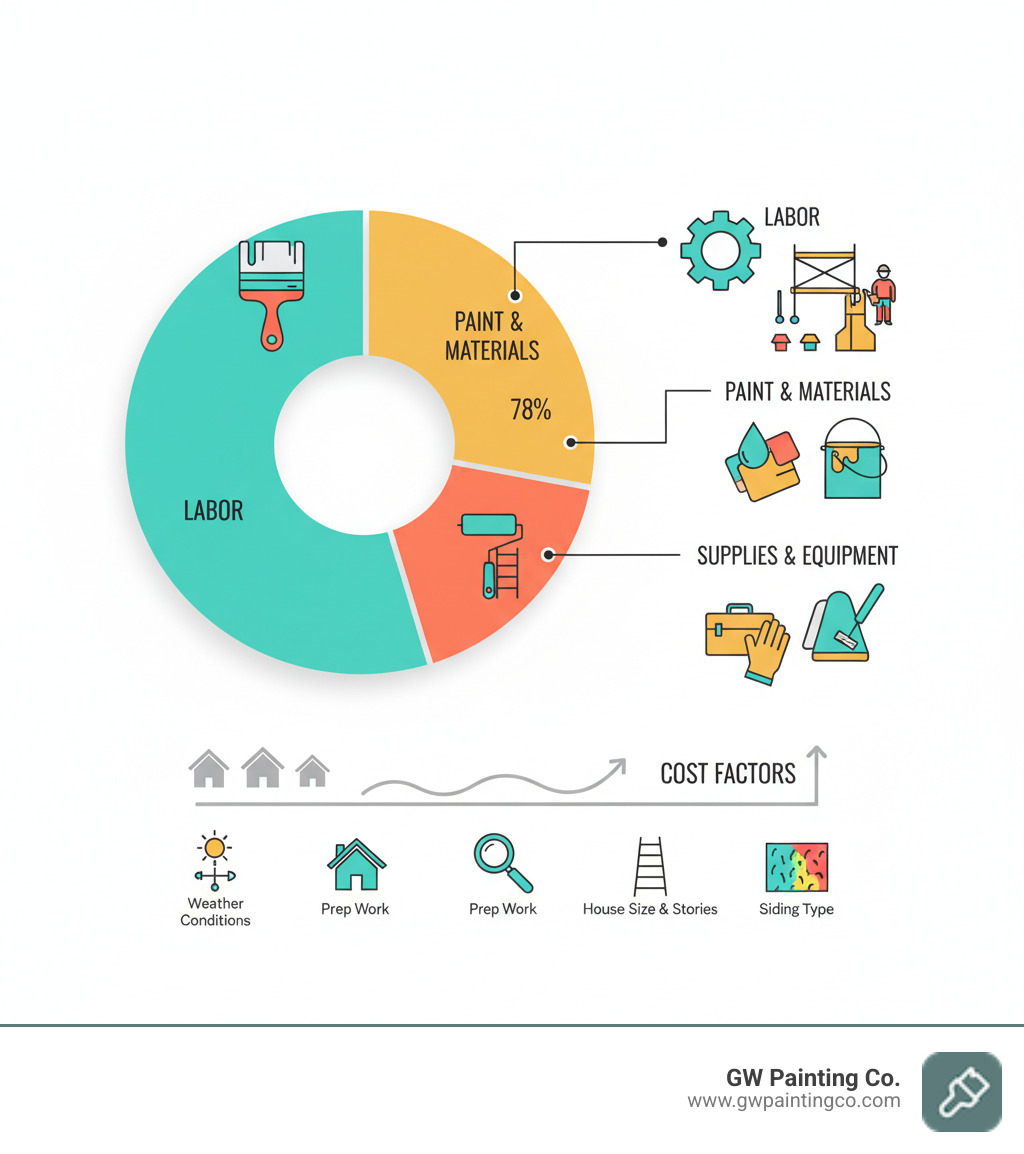
What surprises most Charlotte homeowners is that paint costs are only 10-20% of the total budget. The real expense is labor and prep work, which ensures your investment lasts 7-10 years.
Understanding these costs helps you budget properly, avoid surprises, and decide when to DIY versus hiring professionals. While a good paint job can deliver a 55% return on investment, a poor one can lower your home's value.
The National Average Cost to Paint a House Exterior in 2025
The cost to paint house exterior projects in 2025 varies widely, as every home is different. Nationally, expect to pay $2.16 to $4.30 per square foot. Including prep work and quality materials, realistic costs land between $1.50 to $4.00 per square foot. The average homeowner has recently spent around $5,174.
Most professional projects fall into the $5,000 to $10,000 range, though larger or more complex homes can reach $18,000.
Average Painting Costs by Home Size
Your home's size and height are the biggest cost drivers. Here's what homeowners are paying in 2025:
- Smaller homes (around 1,500 sq ft): A one-coat refresh costs $5,500 to $6,500. A more durable two-coat job is $6,800 to $8,000.
- Medium homes (2,000-2,500 sq ft): A one-coat repaint runs $6,500 to $8,000, while a two-coat job ranges from $8,000 to $10,000. The national average for a 2,500-square-foot, two-story home is $7,582.
- Larger homes (over 4,000 sq ft): A one-coat project starts at $10,000, with two-coat applications reaching $12,500 or more.
The number of stories also makes a huge difference. Single-story homes are the most budget-friendly ($1,000 to $6,400), while two-story homes jump to $3,500 to $10,500—often 25% to 50% more than a similar-sized ranch. Three-story homes can range from $5,000 to $18,000.
Why Prices Vary So Much
Several factors create price variations between similar-sized homes:
- Location: Labor and material costs can differ by 10% to 50% depending on your area. According to US Bureau of Labor Statistics wage data, painter wages fluctuate significantly across markets.
- Market Conditions: Recent supply chain issues have pushed material costs higher, with paint prices rising over 20% in some North Carolina markets in recent years.
- Home Complexity: Intricate trim, dormers, or bay windows can add 10% to 50% to your base cost, as they require more time and skill.
- Labor Quality: Accounting for 75% to 90% of your total cost, experienced and insured craftsmanship is the biggest factor in a long-lasting result.
Understanding these variables helps set realistic expectations. For more information on our approach, check out our painting services.
Key Factors That Determine Your Final Painting Price
When contractors estimate your home's exterior, they're doing more than just eyeballing the house. Understanding what goes into the cost to paint house exterior helps you make sense of quotes and spot when someone might be cutting corners.
The Crucial Role of Preparation Work
A surprising 60% of labor costs occur before any paint is applied. Proper preparation is what separates a paint job that lasts a decade from one that peels in two years. Key steps include:
- Power washing to remove dirt, mildew, and loose paint for better adhesion (typically 10-22 cents per sq ft).
- Scraping loose paint, which can be labor-intensive if peeling is extensive.
- Sanding surfaces to create a smooth canvas for new paint.
- Caulking gaps around windows and doors to block moisture (adds $0.46 - $0.88 per linear foot).
- Wood rot and siding repair, which is crucial to address before painting over them.
This essential prep work can add $0.57 to $1.12 per square foot to your cost to paint house exterior, but it's the foundation of a durable finish.
Labor: The Biggest Cost Factor
Labor is the biggest expense, making up 75% to 90% of your total project cost. You can't risk quality by shopping for discount labor.
Professional painters in Charlotte typically charge $25 to $100 per hour, with experienced crews often at $40-$80 per hour per painter. Some price by square footage ($1 to $2 per sq ft for labor).
Key drivers of labor costs include:
- Experience and Skill: Seasoned painters work efficiently and deliver lasting results.
- Accessibility: Multi-story homes or steep rooflines require specialized equipment like scaffolding and more time.
- Insurance and Licensing: Reputable companies carry coverage to protect their workers and your property, which is factored into their rates.
Home Size, Style, and Condition
A home's size, style, and condition directly impact the cost to paint house exterior.
- Total Paintable Square Footage: This includes all vertical surfaces—walls, gables, and dormers—not just the home's footprint.
- Multiple Stories: Two-story homes cost 25% to 50% more than single-story homes due to equipment and safety needs.
- Architectural Details: Intricate trim, shutters, and decorative elements require detailed brushwork, increasing labor costs. Trim alone can cost $1 to $6 per linear foot.
- Current Condition: Extensive peeling, chalking, or failing paint requires significant prep work. Homes built before 1978 may need lead paint abatement, adding $8-$15 per square foot.
How Siding Material Affects the Cost to Paint a House Exterior
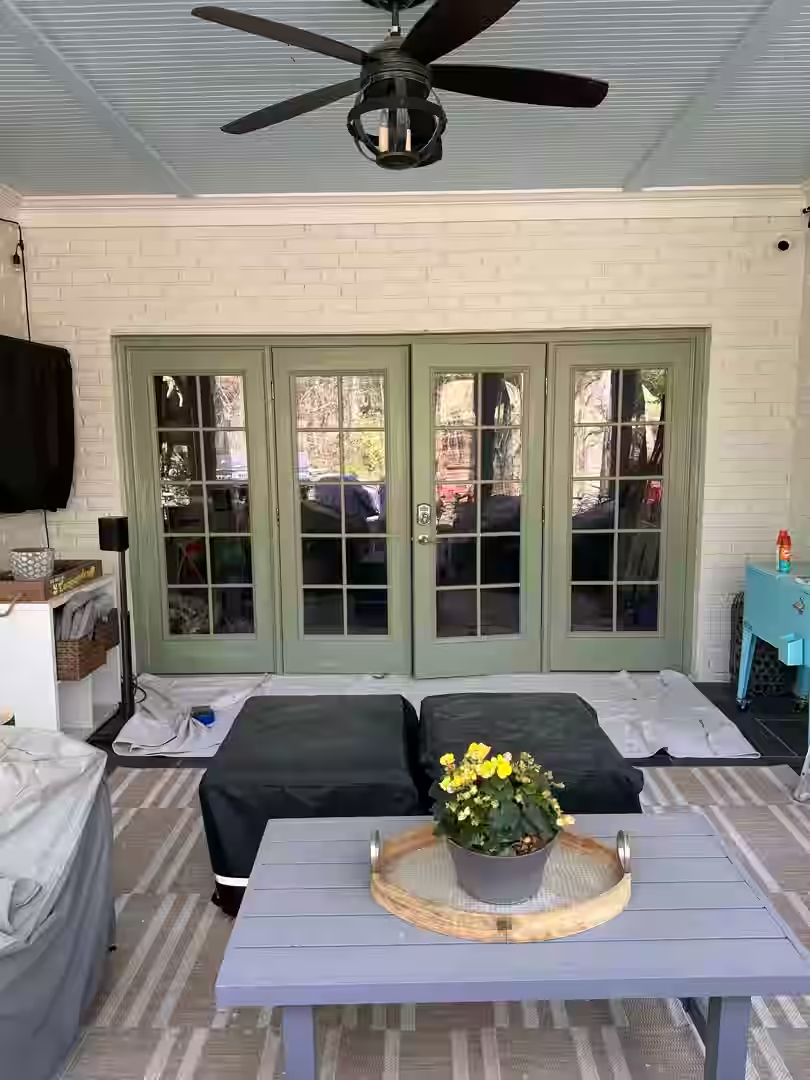
Different siding materials have different price points for painting due to their unique needs.
- Vinyl Siding ($1 - $2.50/sq ft): The most budget-friendly, but requires special vinyl-safe paints to prevent warping.
- Wood Siding ($1 - $3/sq ft): Often needs extensive prep like scraping and sanding due to moisture absorption.
- Metal Siding ($1 - $4/sq ft): Needs thorough cleaning, rust treatment, and a quality primer for adhesion.
- Brick Siding ($2.50 - $5/sq ft): Its porous surface absorbs more paint and requires special masonry primers, slowing application.
- Stucco Siding ($3 - $5.50/sq ft): The most expensive due to its porous, textured nature, requiring extensive prep and specialized paint.
Porous materials absorb more paint and take longer to cover, increasing both material and labor costs.
Paint and Materials: Quality Pays Off
Paint only represents 10-20% of your total project cost, but quality is crucial for longevity.
- Paint Quality: Prices range from $20 - $100 per gallon. Since labor is the biggest expense, spending a bit more on premium paint for better durability is a smart investment. High-quality acrylic ($20 - $70/gallon) can protect your home for 5 to 10 years.
- Paint Finish: Finishes affect cost and performance. Flat paint ($20 - $40/gallon) hides imperfections, while satin ($30 - $60/gallon) and semi-gloss ($40 - $90/gallon) offer increasing durability.
- Number of Coats: Most homes need two coats for optimal coverage, which increases the cost to paint house exterior by about 25% over a single coat. Dramatic color changes may require more coats or a tinted primer, adding up to 30% to material costs.
A quality primer is also essential for adhesion, especially on prepped or challenging surfaces. For more information on our material selection, see our painting services.
DIY vs. Hiring a Professional Painter
Deciding whether to paint your home yourself or hire a professional is a common dilemma for Charlotte homeowners. While DIY might seem like a way to save money, the reality is more complex.
| Feature | DIY Exterior Painting | Professional Exterior Painting |
|---|---|---|
| Total Cost | $500 - $2,400 (for supplies/tools, not including paint) | $5,000 - $15,000 (includes labor, paint, supplies) |
| Time Commitment | 2-4 weeks or more (for a 3-4 day professional job) | 3-4 days (for an average-sized home with a crew) |
| Equipment Needed | Ladders ($250+), pressure washer (rent/buy), sprayer (rent/buy), brushes, rollers, tarps, safety gear | Specialized equipment (scaffolding, lifts, commercial sprayers), professional safety gear |
| Safety Risks | High risk of falls, injuries (especially on multi-story homes) | Minimized risk due to trained, insured professionals following OSHA ladder safety guidelines |
| Final Quality | Varies widely, prone to uneven finish, missed spots | Consistent, high-quality, long-lasting finish with proper prep and application |
The True Cost of DIY Exterior Painting
While you save on labor, DIY painting isn't cheap. Expect to spend $500 to $2,400 on supplies and tools before buying paint. Quality exterior paint runs $40 to $100 per gallon, and an average home needs 12-15 gallons for two coats.
Equipment costs add up: a 28-foot ladder is around $250, and renting scaffolding can be $800. You'll also need a pressure washer and other tools. The biggest cost, however, is your time. A professional crew can finish in 3-4 days, while a DIY project often takes 2-4 weeks, assuming good weather. DIY exterior painting is a "herculean task" that is difficult, time-consuming, and potentially dangerous.
The Benefits of Hiring a Professional Crew
For most homeowners, the benefits of hiring a professional outweigh the DIY savings.
- Efficiency and Expertise: Professionals understand how to prep different siding materials and handle tricky architectural details for a flawless finish.
- Quality and Durability: Proper prep and application techniques result in a paint job that lasts 7-10 years, not two.
- Safety Compliance: Trained crews follow OSHA ladder safety guidelines, minimizing the risk of accidents.
- Warranties and Guarantees: Reputable companies offer warranties (often 2 years) on workmanship, giving you peace of mind.
- Your Time Back: Hiring a pro frees up your weekends to enjoy your newly painted home.
To see the difference professional expertise makes, take a look at our past projects.
Maximizing Your Investment: Smart Painting Strategies
Exterior painting is an investment that makes your home look amazing and protects it from the elements. Smart choices can stretch your dollars and deliver lasting results.
Is Painting Your House Exterior a Good Investment?
Absolutely. Exterior painting is one of the best home improvement investments, offering a solid 55% return on investment (ROI), with some homeowners seeing returns as high as 141%. When selling, a fresh coat of paint can boost your home's market value by up to 20%.
Beyond resale value, a quality paint job protects your home from moisture and UV rays, preventing costly wood rot, siding damage, and structural repairs. See the difference it can make in our exterior restoration painting project.
How Often to Repaint and the Best Time of Year
Most homes need repainting every 5-10 years. Look for signs like fading, chalking, or peeling paint. In Charlotte's climate, a quality paint job can last 7-10 years.
The best time to paint in North Carolina is late spring through early fall, when temperatures are consistently above 50 degrees with several dry days. Don't wait for paint to fail completely; addressing issues early means less prep work and lower costs.
How to Save Money on the Cost to Paint a House Exterior
Trim your cost to paint house exterior without sacrificing quality with these tips:
- Do Simple Prep Yourself: Power washing or trimming bushes can reduce professional labor hours. Leave dangerous ladder work to the pros.
- Stick with Similar Colors: A dramatic color change requires more primer and paint, increasing material costs by 20-30%.
- Don't Delay Maintenance: Fixing small peeling patches promptly avoids more expensive repairs later.
- Invest in Quality Paint: Premium paint lasts 8-10 years versus 3-5 for budget paint, meaning you'll paint half as often and save on long-term labor costs.
- Bundle Projects: Painting your deck or fence at the same time can often result in better overall pricing.
Understanding Your Professional Painting Quote
A detailed, transparent quote is the first sign of a professional who respects your investment in the cost to paint house exterior. It should be a clear roadmap for your project. Here’s what to look for:
- Detailed Scope: The quote should list exactly which surfaces will be painted (walls, trim, doors, etc.) to avoid surprises.
- Specific Prep Work: It must detail every prep step: power washing, scraping, sanding, caulking, and priming. Vague terms like "prep work included" are a red flag.
- Exact Paint Specifications: Look for the paint brand, type, and finish (e.g., "Sherwin Williams Duration Exterior in Satin"). This ensures you get the quality you paid for.
- Cost Breakdown: A good quote separates labor and material costs. Labor typically accounts for 75-90% of the total.
- Proof of Insurance: The company should carry at least $1 million in liability insurance and worker's compensation. Ask for certificates to verify.
- Project Timeline: A realistic start date and completion estimate should be included.
- Warranty Details: A professional stands by their work with a warranty (often two years) covering materials and workmanship.
- Total Fixed Price: The quote should offer a fixed price, not an hourly rate that can escalate.
Be wary of unusually low bids, as they often indicate cut corners. Trust your instincts and choose a contractor who answers your questions thoroughly and doesn't rush you.
Conclusion
Understanding the cost to paint house exterior comes down to a few key points. The national average is around $7,582, but your home's size, condition, and siding type will determine your final price.
The biggest takeaway is that labor and prep work are king, accounting for the majority of the cost. This is what ensures a paint job lasts. While DIY is an option, most Charlotte homeowners find the efficiency, safety, and warranty of a professional crew to be a worthwhile investment, delivering a strong 55% ROI and protecting their home from damage.
Always insist on a detailed quote that specifies the prep work, paint products, and warranty. This transparency is the hallmark of a true professional.
For homeowners in the Charlotte area, GW Painting Co. offers transparent pricing and exceptional workmanship. We believe your home deserves lasting protection and curb appeal that makes you smile.
Ready to transform your home's exterior? Get your free exterior residential painting estimate today and see what quality craftsmanship can do for your most important investment.