.avif)

How to Vet Commercial Paint Contractors and Handyman Services Near You
.avif)

.svg)
Why Hiring the Right Commercial Paint Contractors Near Me Matters More Than You Think
When searching for commercial paint contractors near me, the stakes are higher than a typical home repaint. The wrong hire can mean business disruption, failed coatings, and costly do-overs. Because of the immense scale, safety hazards, and specialized coatings required, commercial painting is strictly a professional service and should never be attempted as a DIY project.
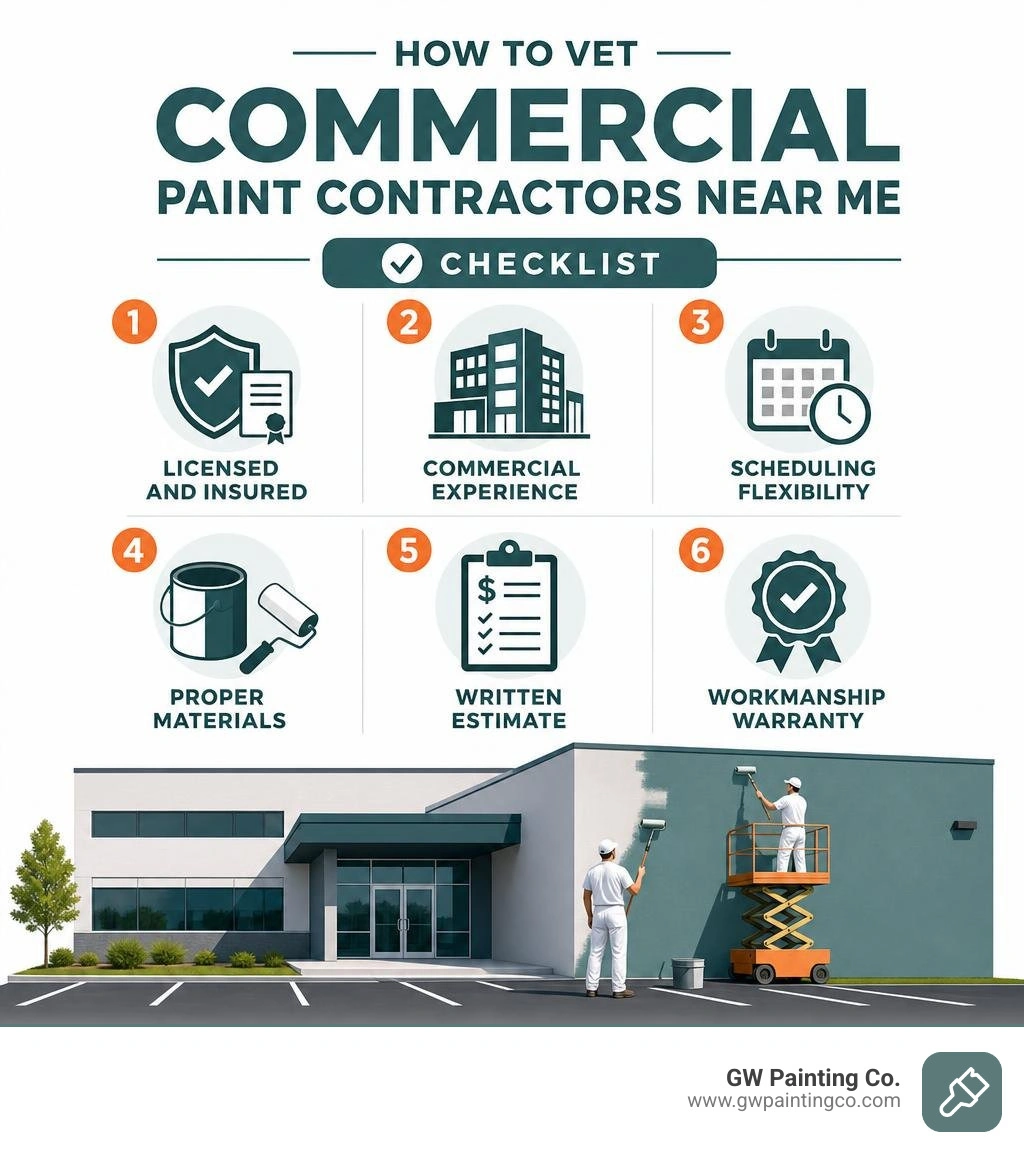
Here's what to look for at a glance:
- Licensed and insured - Verify state contractor licensing, general liability, and workers' compensation coverage
- Commercial experience - Look for a portfolio of commercial projects, not just residential work
- Scheduling flexibility - Confirm they offer off-hours, night, or weekend crews
- Proper materials - Ensure they specify commercial-grade, durable coatings for your surface type
- Written estimate - A detailed, itemized quote protects you from surprise costs
- Workmanship warranty - Reputable contractors stand behind their work in writing
Your building's exterior and interior paint does more than look good. It protects surfaces from moisture, UV exposure, and daily wear. It shapes how customers, tenants, and employees perceive your business the moment they walk in.
Yet finding a truly qualified commercial painting contractor is harder than it sounds. Many businesses that list themselves as commercial painters are primarily residential crews taking on bigger jobs without the right equipment, insurance, or experience.
This guide walks you through exactly how to vet commercial painting contractors in your area — so you hire right the first time.
Key Differences Between Commercial and Residential Painting
While both residential and commercial painting require brushes, rollers, and paint, the similarities end there. Understanding these differences is crucial when evaluating candidates in the Charlotte metro area, from Concord, NC down to Fort Mill, SC.
Project Scale and Substrates
Residential painting typically deals with wood, drywall, and standard siding. Commercial projects, however, often involve massive concrete tilt-up structures, structural steel, concrete masonry units (CMU), and metal siding. These surfaces require specialized commercial-grade primers, block fillers, and high-performance topcoats to ensure proper adhesion and longevity.
Surface Durability and Coatings
Commercial environments endure heavy foot traffic, chemical exposure, and constant physical contact. While a standard flat or eggshell latex paint works beautifully for interior residential painting, a commercial hallway or retail space requires specialized scuff-resistant coatings or pre-catalyzed epoxies. Similarly, exterior residential painting focuses on curb appeal and wood protection, whereas commercial exteriors often require elastomeric waterproof coatings to shield masonry from wind-driven rain.
Specialized Equipment
You will rarely see a residential crew operating a 65-foot boom lift or industrial airless spray rigs. Commercial paint contractors must be certified and trained to operate heavy equipment safely, manage complex scaffolding, and apply specialized industrial coatings.
Scheduling Flexibility
In residential painting, crews typically work standard daytime hours. In the commercial sector, keeping your business open is the priority. Commercial painters must offer night, weekend, and holiday shifts to ensure zero downtime for your operations.
How to Find and Vet Reputable Commercial Paint Contractors Near Me
Finding local contractors is easy; finding reputable ones requires a systematic vetting process.
Leverage Trusted Local Directories
Start your search by looking at trusted business directories such as the Better Business Bureau. Filter your searches specifically for "Commercial Painting Contractors" rather than general handymen. Look for businesses with an A+ rating and verified physical addresses within the Carolinas.
Because regional climate conditions like high summer humidity and winter freeze-thaw cycles impact paint performance, it is vital to hire a contractor with deep roots in North Carolina and South Carolina. Working with an established local painting company ensures they understand how regional weather patterns affect paint adhesion and curing times.
Verify Licensing and Insurance
Never take a contractor's word for it. In North Carolina and South Carolina, commercial painting projects exceeding certain financial thresholds require a valid commercial general contractor license.
- General Liability Insurance: Ensure they carry at least $1 million to $2 million in general liability coverage to protect your property from accidental damage.
- Workers' Compensation: Verify they have active workers' compensation insurance for all crew members. If an uninsured worker is injured on your commercial property, your business could be held liable.
- Certificate of Insurance (COI): Request a COI directly from their insurance broker before any work begins on your site.
What to Look For in Commercial Paint Contractors Near Me
When reviewing potential candidates, look for these key indicators of professionalism and expertise:
- Safety Certifications and OSHA Compliance: Commercial painting involves working at heights, handling hazardous materials, and operating heavy machinery. Ensure the contractor's crew follows OSHA safety standards and strict job-site safety protocols to reduce liability on your property.
- A Diverse Project Portfolio: Look for a contractor who has successfully completed projects similar to yours. If you manage a medical facility in Gastonia, NC, ask for examples of healthcare projects they have completed. If you own an industrial warehouse in Matthews, NC, look for industrial coatings experience.
- Strong Client Testimonials: Reliable contractors should have a proven track record of positive reviews from local business owners, property managers, and general contractors.
- Manufacturer Partnerships: Top-tier commercial painters often maintain partnerships or national accounts with leading paint manufacturers like Sherwin-Williams and Benjamin Moore. This allows them to secure volume pricing on premium materials and pass those savings directly to you, while ensuring the high level of industry compliance, environmental standards, and technical expertise required for large-scale commercial and industrial spaces.
Questions to Ask Commercial Paint Contractors Near Me Before Hiring
Before signing a contract, schedule a consultation and ask these critical questions:
- What kind of workmanship warranty do you offer? A reputable commercial contractor should offer a written warranty (typically 2 to 5 years) covering paint peeling, blistering, or premature failure due to poor application.
- Will there be a dedicated on-site supervisor? You should have a single point of contact, such as an on-site foreman or project manager, who manages the daily crew, answers your questions, and provides progress updates.
- What are your cleanup and safety protocols? Ensure the crew performs daily cleanups so your customers or tenants are not exposed to wet paint, dust, or dangerous tools.
- How do you handle paint waste and environmental compliance? Ask if they follow eco-friendly disposal practices. Leading contractors partner with environmental compliance firms to safely recycle paint waste and reduce environmental impact.
- How do you ensure adherence to regional commercial painting guidelines? Ensure they are familiar with local building codes, EPA lead-safe guidelines (especially for structures built before 1978), and VOC (volatile organic compound) regulations in North and South Carolina.
Commercial Painting Services and High-Traffic Paint Selection
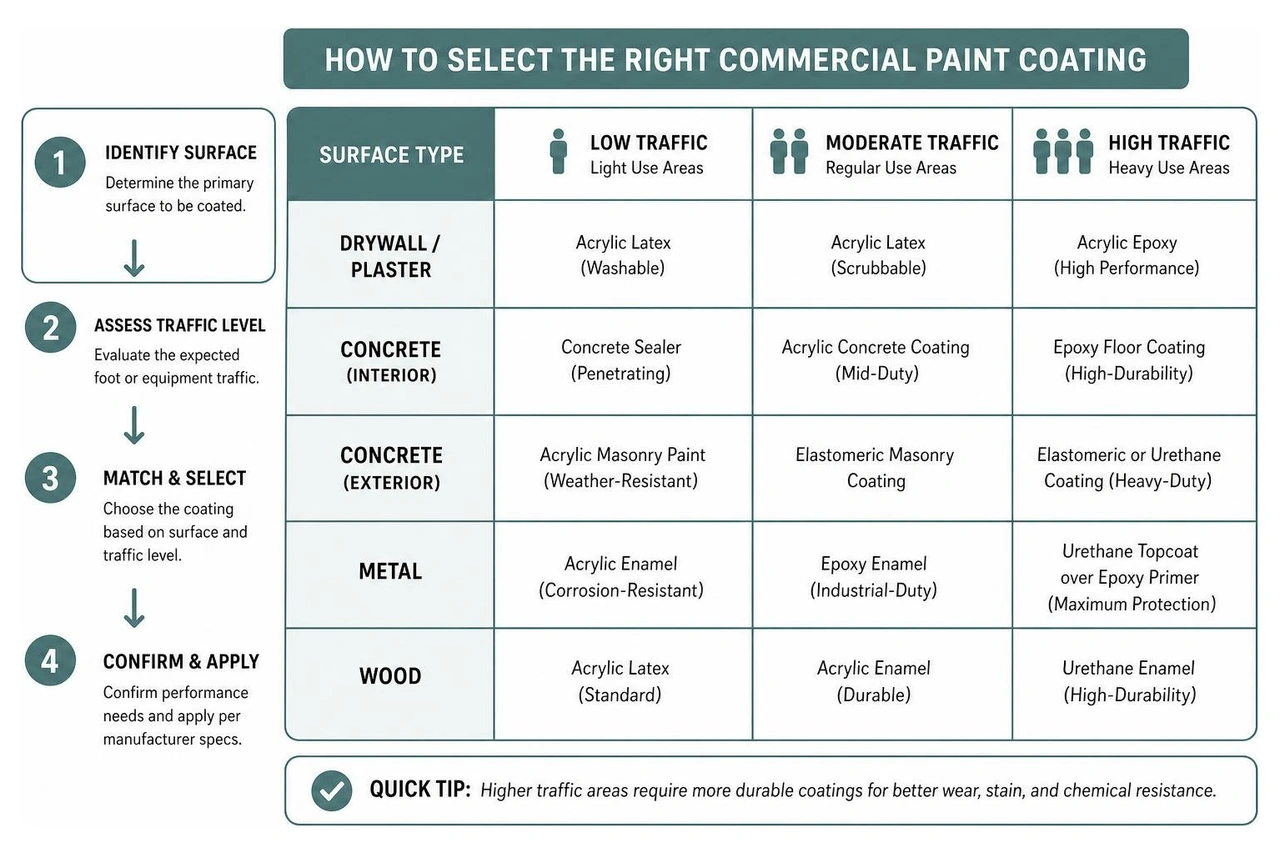
Commercial properties require tailored painting solutions. Standard household latex paint will quickly fail in a high-traffic commercial setting.
Common Commercial Painting Services
A full-service commercial painter provides more than just wall paint. Their offerings typically include:
- Interior Commercial Painting: Offices, retail spaces, common areas, and hallways.
- Exterior Commercial Painting: Masonry, stucco, metal siding, and concrete tilt-up repairs.
- Epoxy Floor Coatings: Durable, slip-resistant finishes for warehouse floors, commercial kitchens, and automotive shops.
- Specialty Painting and Coatings: If your facility has unique architectural elements, you may need speciality painting services, including wood staining, whiteboard wall coatings, or high-durability industrial coatings.
Selecting the Right Paint for High-Traffic Areas
To get the most out of your investment, work with your contractor to specify the right products:
- Scuff-Resistant Paints: Products like Benjamin Moore Scuff-X are engineered specifically for busy environments like school hallways, retail checkout areas, and office lobbies. They resist black marks from shoes, carts, and equipment, significantly reducing maintenance touch-ups.
- Pre-Catalyzed Epoxies: Ideal for commercial kitchens, restrooms, and locker rooms. These coatings provide a hard, tile-like finish that resists water, chemicals, and frequent scrubbing.
- Low-VOC and Zero-VOC Coatings: When painting occupied offices or healthcare facilities, low-odor, low-VOC paints are essential. They emit minimal fumes, allowing your employees and customers to remain in the building comfortably and safely during application.
Understanding Commercial Painting Costs, Timelines, and Business Disruption
To keep your business running smoothly, you must understand how commercial projects are priced and scheduled.
Commercial Painting Costs
The cost of commercial painting varies depending on the size and scope of the project. We offer free estimates to provide you with an accurate quote tailored to your specific needs.
Generally, commercial pricing depends on factors like substrate condition, accessibility (e.g., high ceilings requiring lifts), number of coats, and whether the work must be completed overnight. For example, open warehouses with large, flat walls are often less expensive per square foot to paint than segmented, multi-room medical suites that require extensive masking and detailed trim work.
Minimizing Business Disruption
A professional contractor will develop a detailed strategy to minimize operational downtime. This includes:
- Off-Hours Scheduling: Executing the project overnight, during weekends, or over major holidays when your business is closed.
- Phased Execution: Dividing the project into manageable sections. For example, painting one floor of an office building at a time so employees can be temporarily relocated to another floor without disrupting their work.
- Clean Turnovers: Ensuring the crew thoroughly cleans the workspace at the end of every shift so your business can open the next morning without safety hazards.
To learn more about how professional painting can elevate your business property, check out our specialized services for small business & more.
| Facility Type | Typical Project Duration | Key Operational Requirements | Recommended Coatings |
|---|---|---|---|
| Retail & Office Spaces | 3 days to 2 weeks | Off-hours scheduling, phased execution | Scuff-resistant latex, low-VOC finishes |
| Medical & Healthcare | 2 days to 1 week | Extreme cleanliness, zero-VOC paint | Pre-catalyzed epoxy, anti-microbial coatings |
| Industrial & Warehouse | 1 to 4 weeks | Coordination with shipping schedules, lift access | High-build block fillers, epoxy floor coatings |
| Schools & Churches | 1 to 3 weeks | Summer or holiday scheduling, high durability | Scuff-resistant coatings, durable semi-gloss |
How to Prepare for a Commercial Painting Estimate and Walkthrough
The key to an accurate, surprise-free commercial quote is a thorough site walkthrough. Here is how to prepare:
- Define Your Scope of Work: Identify exactly which areas need painting, including walls, ceilings, door frames, trim, and exterior surfaces. Note any areas requiring minor carpentry or drywall repairs.
- Identify Access Restrictions: Let the contractor know about security clearances, keycard access, parking restrictions, or tight areas that might prevent the use of standard ladders or lifts.
- Determine Your Operating Hours: Clearly outline your preferred work windows (e.g., weekdays after 6:00 PM, Saturdays only) so the contractor can factor labor shift differentials into their estimate.
- Check the Building's Age: If your commercial building in the Charlotte area was constructed before 1978, it may contain lead-based paint. Let the contractor know so they can perform necessary lead testing and follow EPA Lead-Safe Renovation guidelines.
Frequently Asked Questions About Commercial Painting
How often does a commercial building need to be repainted?
The lifespan of your paint job depends on traffic levels and environmental exposure:
- Interior Commercial Spaces: Typically require repainting every 5 to 7 years to maintain a fresh, professional image. High-traffic areas like lobbies, restrooms, and corridors may need touch-ups or repainting every 3 to 5 years.
- Exterior Commercial Buildings: In the Carolinas, exterior surfaces face heavy UV exposure, high humidity, and occasional freeze-thaw cycles. To protect your building's substrate from wood rot or masonry deterioration, plan to repaint every 7 to 10 years.
Can a commercial building be painted while the business remains open?
Yes. Professional commercial painters utilize low-VOC, quick-drying paints to eliminate harsh chemical odors. By coordinating night or weekend shifts and working in phased sections, a skilled crew can paint your facility with zero downtime for your business.
Why is commercial painting strictly a professional service rather than a DIY project?
Commercial painting should never be treated as a DIY project or left to general handymen. It requires specialized industrial coatings, heavy equipment like boom lifts, and strict adherence to OSHA safety standards. Attempting a DIY application or using unqualified staff can lead to severe safety hazards, premature coating failure, and costly business disruptions. Hiring licensed, professional commercial paint contractors is the only way to ensure a durable, high-quality finish and full regulatory compliance.
Conclusion
Investing in professional commercial painting is a powerful way to protect your real estate asset, boost employee morale, and make a lasting first impression on your clients. By thoroughly vetting your contractor’s licensing, insurance, safety certifications, and commercial experience, you can ensure a seamless, stress-free project.
If you are looking for top-rated, reliable painting services in the Charlotte metro area, we are here to help. At GW Painting Co., we provide licensed, insured interior and exterior painting services across Charlotte, NC, Concord, NC, Gastonia, NC, Matthews, NC, Waxhaw, NC, and down into Fort Mill, SC and Indian Land, SC. Our clean, respectful crews are dedicated to delivering exceptional workmanship backed by our satisfaction guarantee.
Ready to transform your business space? Schedule a consultation with GW Painting Co. today, and let's discuss how we can bring your vision to life!