.avif)

Pick Your Perfect Palette: Expert Tips for Selecting Interior Paint Colors
.avif)

.svg)

Why Choosing Paint Colors Feels So Overwhelming
Choosing paint colors is one of the most anxiety-inducing decisions in home improvement. According to color consultants, approximately 75% of homes have existing finishes that don't perfectly coordinate, making the selection process even more challenging. You're not just picking a color you like—you're finding one that works with your flooring, countertops, lighting, and adjacent rooms.
Quick Guide to Choosing Paint Colors:
- Start with your home's permanent finishes (countertops, flooring, tile) rather than personal preference
- Consider room exposure (north, south, east, or west-facing) as it dramatically affects how colors appear
- Test samples in your actual space using peel-and-stick options or painted boards
- Observe colors throughout the day under different lighting conditions
- Limit opinions to 1-2 trusted sources instead of polling friends
- Accept that perfect might not exist given your home's existing finishes
The "whole house paint paralysis" is real. Many homeowners end up choosing safe neutrals for every room simply to avoid making the wrong decision. But the right paint color can transform your space, enhance architectural features, and make rooms feel larger, brighter, or cozier.
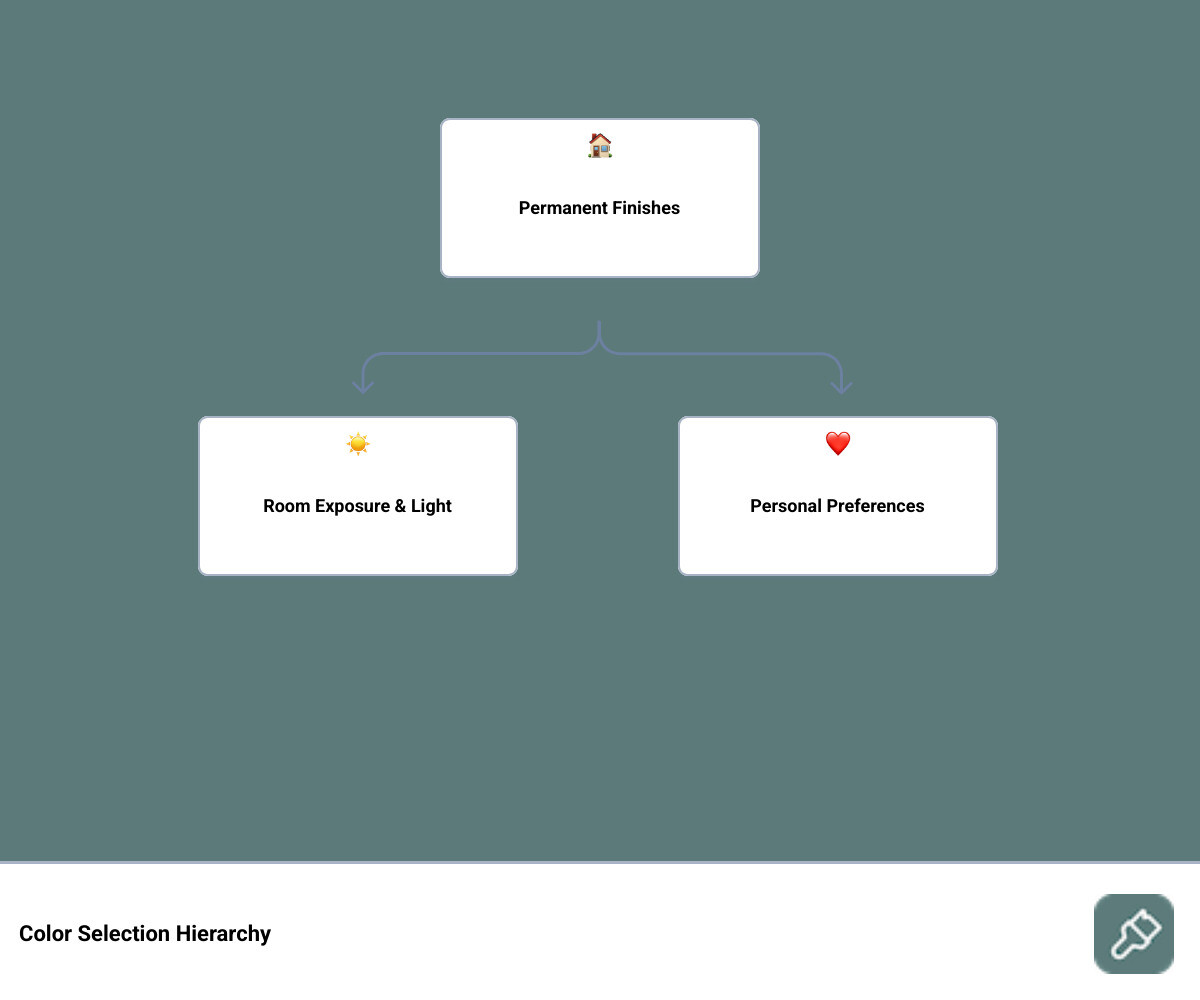
The key is removing emotion from the process and following a logical hierarchy: what your home's finishes need comes first, then exposure and lighting, and finally your personal taste. This approach, recommended by professional color consultants, helps you make confident decisions that you'll love for years.
Professional painters at GW Painting Co. work with Charlotte homeowners every day to bring their color visions to life, and we understand the stress that comes with these decisions. The cost of our painting services varies depending on the size and scope of the project, and we offer free estimates to provide you with an accurate quote tailored to your specific needs.
The Psychology and Strategy of Choosing Paint Colors
When we walk into a home in Concord or Fort Mill for an estimate, we often see the same thing: a wall covered in thirty different shades of "greige" and a homeowner who looks like they haven't slept in a week. This is what we call "color anxiety." It happens because we treat choosing paint colors as an emotional decision rather than a strategic one.
Anxiety has a way of hijacking the creative process. It makes us overthink the "undertones" until every gray looks purple and every white looks yellow. To regain control, we need to stop looking for the "perfect" color and start looking for the "right" color for the specific environment.
One of the most effective ways to manage this is to purge the demons of bad samples. If you put a sample on the wall and immediately think, "I hate that," get it out of your sight. Don't leave it there to mock you. Whether you recycle the swatch or, as some experts jokingly suggest, light it on fire while singing Three Days Grace, removing the "no" options clears the mental space for the "yes" options.
If the stress becomes too much, an Interior Paint Color Consultation can be a lifesaver. Having an expert eye helps bypass the emotional bias and decision fatigue that leads to "whole house paint paralysis."
Managing Decision Anxiety when Choosing paint colors
Overthinking is the enemy of a beautiful home. For those of us dealing with a busy brain—whether it's just standard stress or something like ADHD or OCD—the sheer number of choices at a Benjamin Moore or Sherwin-Williams store can be paralyzing. Benjamin Moore alone has over 7,500 locally owned stores, each packed with thousands of chips.
To stop the spiral, we recommend following the Kylie Interiors expert advice: take yourself out of the equation. Instead of asking "What color do I love?", ask "What does this room need?". This shift from subjective desire to objective necessity reduces the pressure on you to be a "creative genius" and turns the project into a solvable puzzle.
Why Friends Aren't Color Experts
It is incredibly tempting to text a photo of your paint swatches to your best friend or post a poll on Facebook. We strongly advise against this.
Friends choose based on their personal taste and their home's lighting. They aren't standing in your living room in Indian Land, SC, looking at how the afternoon sun hits your specific oak floors. They don't see the subtle green undertone in your granite countertops. Polling friends only adds more noise to an already loud process. If you must ask for an opinion, limit it to one or two people who actually understand the architectural context of your home—or better yet, consult a professional who understands color theory.
The Hierarchy of Color Selection
To succeed at choosing paint colors, you must respect the hierarchy. Most people start with their favorite color (Stage 4) and try to force it into a room where it doesn't belong.
The Correct Hierarchy:
- Permanent Finishes: Your flooring, countertops, cabinets, and tile.
- Adjacent Rooms: What colors are already visible from this space?
- Lighting & Exposure: Which way does the room face?
- Personal Taste: Your actual color preference.
Research shows that approximately 75% of homes have finishes that aren’t 100% suited to each other. Maybe the previous owner paired a cool gray floor with warm honey-oak cabinets. In these cases, your paint color has to act as the mediator.
A great example of listening to your home is the use of Colony Green coordination. This color works beautifully when a homeowner "listens" to a countertop that has subtle green or earthy veins, creating a cohesive look that feels intentional rather than accidental.
Listening to Your Home’s Permanent Finishes
Before you even look at a fan deck, audit your fixed elements. These are the things you aren't changing:
- The Kitchen: Cabinets and countertops are the "boss" of the room.
- The Bathroom: Tile and flooring dictate the undertone.
- The Living Room: A brick fireplace or a large stone hearth has a massive influence.

If your wood cabinets have a heavy orange or red undertone, a blue-gray paint might actually make them look more orange because blue and orange are opposites on the color wheel. By recognizing these fixed elements first, you narrow your choices down to colors that actually complement the space.
Determining What Your Finishes Need
Every finish has a "need."
- Warm finishes (like travertine tile or gold-toned wood) often need warm neutrals or specific greens/blues to feel balanced.
- Cool finishes (like Carrara marble or gray-washed floors) thrive with cooler grays or crisp whites.
If you have mismatched finishes—a common problem—you're looking for a "happy medium." This might be a "greige" (a mix of gray and beige) that has enough warmth to satisfy the cabinets but enough coolness to coordinate with the flooring. This creates a "color flow" that prevents the house from feeling like a series of disjointed boxes.
Mastering Light and Undertones
Light is the most transformative element in painting. A color that looks like a beautiful soft sand in the store can look like a muddy yellow in your Gastonia home if the lighting isn't right.
How Exposure Impacts Choosing paint colors
The direction your windows face changes the "temperature" of the light entering the room.
| Room Exposure | Light Characteristic | Best Paint Strategy |
|---|---|---|
| North-Facing | Cool, bluish, consistent | Use warm-toned colors to counteract the "chill." Avoid cool grays. |
| South-Facing | Warm, intense, golden | Most colors look great. Can handle cooler tones or very dark hues. |
| East-Facing | Bright morning (yellow), shadowy afternoon | Use neutrals that look good in both warm and cool light. |
| West-Facing | Shadowy morning, intense orange evening | Watch out for "golden hour" making reds/oranges too intense. |
For example, seeing Agreeable Gray in different lights is a masterclass in color shifting. In a North-facing room, it can look like a flat, stony gray. In a South-facing room, the warmth comes out, making it a perfect soft greige.
The Impact of Artificial Lighting
Don't forget the lights you turn on at night. LED bulbs are categorized by Kelvin (K) ratings.
- 2700K - 3000K (Warm White): Adds a yellow/orange glow. Great for making a room feel cozy, but it will turn a crisp white into a creamy off-white.
- 4000K - 5000K (Daylight): Very blue/white. This provides the most "accurate" color but can feel sterile or "office-like" in a residential setting.
When choosing paint colors, we always tell our clients in Matthews and Waxhaw to check their samples under the bulbs they actually use.
Practical Sampling and Application Techniques
The old way of sampling—painting small squares directly onto a purple wall—is a recipe for disaster. The existing wall color will "bleed" through or distract your eye, making the new sample look wrong.
We highly recommend using SAMPLIZE Peel & Stick samples. These 12x12 sheets are made with real paint. You can move them from wall to wall and room to room without making a mess.
Pro Sampling Tip: Surround your sample with a white paper border. This creates a "palette cleanser" for your eyes, separating the new color from the old one so you can see the true undertone.
The 60-30-10 Rule
To create a balanced room, follow this classic design rule:
- 60% Dominant Color: Usually your walls.
- 30% Secondary Color: Upholstery, flooring, or large rugs.
- 10% Accent Color: Artwork, pillows, or a bold accent wall.
Strategic Use of Accent Walls and Trim
Painting isn't just about the four walls. You can use color to highlight or hide architectural features.
- Monochromatic Trim: Painting the walls and trim the same color (but perhaps in different sheens) is a modern trend that makes small rooms feel much larger.
- The "Fifth Wall": Don't ignore the ceiling! A soft, pale blue or a lighter version of your wall color can add incredible depth.
- Dark Trim: Using a darker color for trim while keeping walls light creates a striking, sophisticated frame for the room.
Creating a Cohesive Whole-Home Scheme
While every room can have its own personality, there should be a "visual thread" that connects them. This is especially important in open-concept homes common in the Charlotte area. You can maintain flow by:
- Using the same trim color throughout the entire house.
- Ensuring that all colors share the same "weight" or "dustiness" (their LRV or Light Reflectance Value).
- Choosing colors with similar undertones (e.g., all warm-based neutrals).
Common Pitfalls to Avoid
Even with the best intentions, it's easy to fall into a few common traps.
1. Painting a Dark Room Stark WhiteThis is perhaps the most common mistake we see. Many homeowners think white will "brighten up" a windowless or north-facing room. In reality, white paint needs light to bounce off of. Without it, the white just looks like a dingy, shadowy gray. In dark rooms, it’s often better to lean into the darkness with a rich, mid-tone color that feels intentional and cozy.
2. Ignoring Nearby RoomsWhen you stand in your kitchen, what do you see? If you see the hallway and the living room, those three colors must play nice together. If you have a vibrant teal kitchen next to a terracotta hallway, the transition will feel jarring.
3. Rushing the DecisionPaint is not true until it is dry. Furthermore, it changes every hour as the sun moves. Never pick a color based on a 5-minute look at a tiny paper chip.
The Myth of the Perfect Color
Here is a secret from the pros: the "perfect" color might not exist. If your home has mismatched finishes or you and your spouse have vastly different tastes, you are looking for a "livable compromise."
Livable shades like Sherwin-Williams Agreeable Gray or Pure White are popular for a reason—they are flexible. They might not be the "most exciting" choice, but they work with the widest variety of finishes and lighting conditions.
Avoiding Whole-House Paint Paralysis
We’ve seen homeowners who bought a house where every single room was a different shade of baby blue. This is a classic sign of "paint paralysis"—the previous owner found one color they kind of liked and just used variations of it everywhere because they were too afraid to try anything else.
Don't let fear dictate your home's aesthetic. By using professional swatching and following a logical plan, you can introduce color into your home with confidence.
Frequently Asked Questions about Choosing Paint Colors
Should I choose my paint color before or after buying furniture?
Always choose your paint color last. There are thousands of paint colors, but there might only be three sofas that you actually like and can afford. It is much easier to match a paint color to a rug or a fabric than it is to find a rug that perfectly matches a specific wall color. As the experts say, "When putting together an outfit, you don’t choose your cardigan independent of your shirt underneath."
How do I know if a paint color has a warm or cool undertone?
The easiest way to see an undertone is to compare the color to a "true" version of that hue. If you're looking at a gray, hold it up against a piece of stark white paper or a "true" neutral gray. Suddenly, you'll see the blue, green, or purple hidden inside. You can also look at the darkest color on the paint strip; that usually reveals the "true" base of the lighter shades above it.
Why does my paint look different on the wall than it did on the chip?
This is due to "simultaneous contrast" and lighting. A small chip is surrounded by white or other colors on a fan deck. Once that color is on all four walls, it reflects off itself, intensifying the color. A light blue chip can easily turn into "SpongeBob’s bedroom" once it covers 400 square feet. This is why we always recommend testing a large swatch (at least 4x4 feet) before committing.
Conclusion
Choosing paint colors doesn't have to be a source of stress. By following a logical hierarchy—starting with your permanent finishes, accounting for your room's exposure, and using modern sampling tools like Samplize—you can transform your home into a cohesive, beautiful space.
At GW Painting Co., we take pride in helping our neighbors in Charlotte, NC, and the surrounding areas (including Concord, Gastonia, and Fort Mill) navigate these choices. Our clean, respectful crews are dedicated to professional craftsmanship and ensuring your total satisfaction. Whether you're looking for a fresh coat of a timeless neutral or a bold new personality for your dining room, we are here to help.
Ready to start your home's transformation? More info about interior residential painting services is just a click away. Contact us today for your free estimate and let's pick your perfect palette together!