Professional Painting Rates: How Much to Budget for Your Next Room Makeover


What Does It Cost to Have a Professional Paint a Room in 2026?
The average cost to pay someone to paint a room in 2026 runs between $400 and $1,600, with most homeowners spending around $1,100 depending on room size, paint quality, and the scope of work involved.
Here's a quick snapshot of what to expect:
| Scope | Typical Cost Range |
|---|---|
| Small room (walls only) | $300 – $700 |
| Average room (walls + ceiling) | $624 – $1,100 |
| Large room (walls + ceiling + trim) | $1,100 – $1,600 |
| Cost per square foot | $2.75 – $8.19 per sq ft |
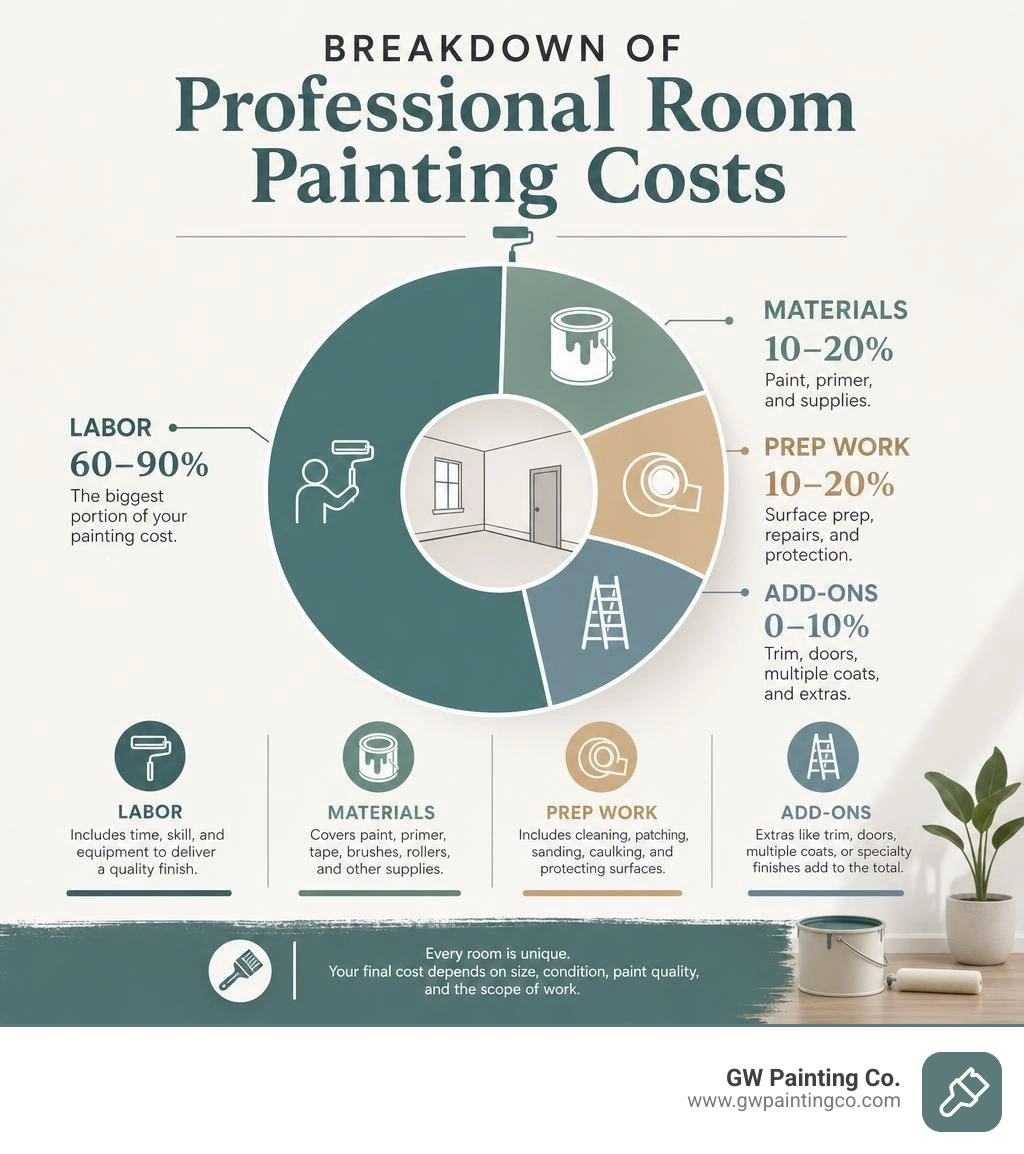
Labor makes up the biggest slice of that bill — typically 60% to 90% of the total cost. The rest covers paint, primer, and supplies.
That means the quality of your painter matters a lot. A cheaper quote doesn't always mean a better deal — it often means skipped prep work, lower-grade paint, and a finish that won't last.
At GW Painting Co., the cost of our services depends on the size and scope of your specific project. We offer free estimates so you know exactly what you're getting before any work begins.
The Average Cost to Pay Someone to Paint a Room in 2026
When planning a home refresh, understanding the financial landscape is the first step toward a successful transformation. Nationally, the typical cost to paint a single room falls into a predictable range, but professional rates can vary significantly depending on the details of the job. According to data from the Cost to Paint a Room | Average Price to Paint a Room | Fixr.com, the national average range sits comfortably between $990 and $1,320, with a baseline average of $1,200 for a comprehensive professional paint job.
However, the final price is highly dependent on whether you are painting only the walls or opting for a full-service refresh that includes the ceiling, doors, baseboards, and intricate trim. If you are looking at basic wall painting, the average charge for painting a room starts lower, often ranging from $300 to $1,000.
To help you visualize where your project might fall, we have compiled a detailed cost breakdown based on room scope and size categories:
| Room Category | Dimensions (Feet) | Floor Square Footage | Professional Cost Range (Walls Only) | Professional Cost Range (Walls, Ceilings & Trim) |
|---|---|---|---|---|
| Small Room (e.g., Powder Room, Small Office) | 8 x 10 | 80 sq. ft. | $300 – $500 | $600 – $900 |
| Medium Room (e.g., Standard Bedroom, Kitchen) | 12 x 12 | 144 sq. ft. | $468 – $800 | $800 – $1,600 |
| Large Room (e.g., Living Room, Primary Suite) | 15 x 20 | 300 sq. ft. | $800 – $1,500 | $1,500 – $2,500+ |
Room Size and the Average Cost to Pay Someone to Paint a Room
It is no secret that larger rooms require more paint and more hours on the ladder. However, square footage does not just apply to the floor area—professional painters calculate costs based on the total paintable surface area of your walls. For example, a small standard bedroom or bathroom under 150 square feet is much faster to complete, resulting in a lower overall labor charge.
If you are wondering about standard bedroom dimensions, the baseline how much does it cost to paint a 12x12 room sits at an average of $468 for walls only. When you add the ceiling, baseboards, and trim, the professional total typically ranges from $750 to $1,600. According to How Much Does It Cost to Paint a Room? (2026), adding these architectural elements can easily double the complexity and time required, which is why a complete room overhaul carries a higher price tag than a simple wall color change.
Cost Per Square Foot Breakdown
To establish a fair and transparent baseline, reputable contractors often utilize the unit cost method. This approach ensures you pay for the exact physical scope of your project. In 2026, professional interior painting averages $2.75 to $4.70 per square foot of space.
Here is how those numbers are typically applied to your home's surfaces:
- Walls Only: Averaging $2.75 per square foot.
- Walls, Ceilings, and Trim: Averaging $4.70 per square foot (and up to $6.75 or $8.19 per square foot for complex layouts or historic homes).
When calculating the paint cost per room, it is important to remember that professional painters do not just look at floor space. They measure the height and perimeter of the walls to determine the exact wall surface area. For a quick estimate of your project's material and labor needs, you can refer to the Interior Paint Cost Calculator (2026) | Gallons & Labor, which utilizes these precise measurements to model realistic project budgets.
Cost Factors: What Drives the Price of Professional Painting?
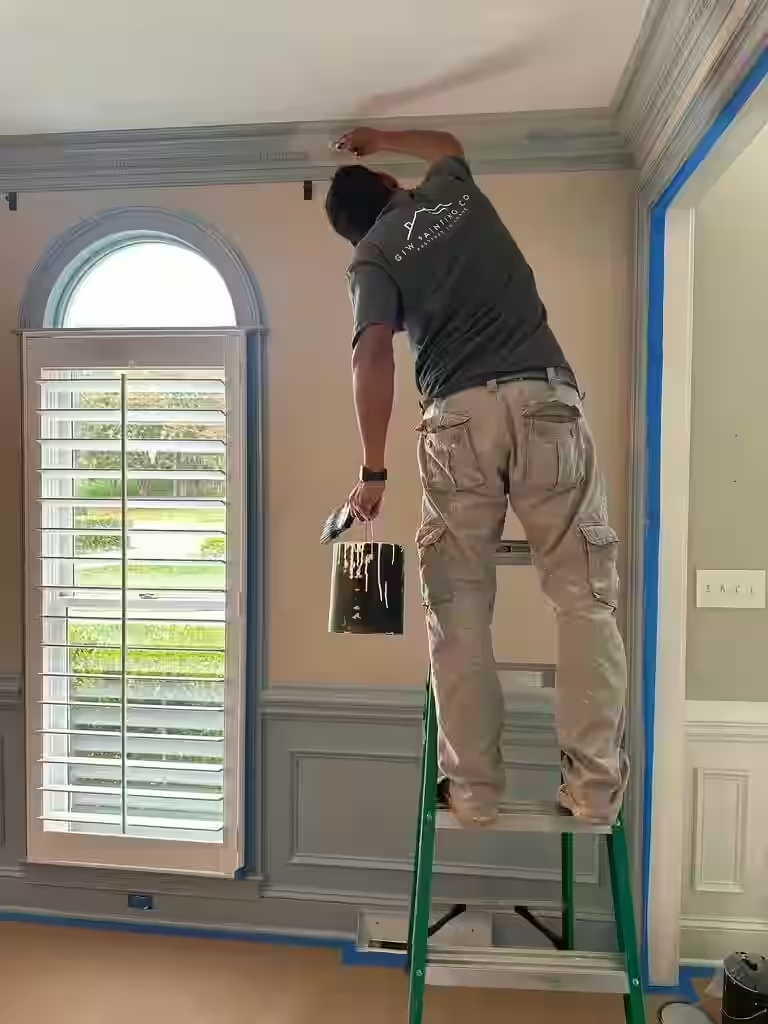
While room size is a major player, several other variables dictate where your final estimate will land. Professional painting is a craft where the final finish is entirely dependent on the quality of the preparation, the tools used, and the environment of the room.
Wall Condition and Prep Work
If you ask any true painting artisan what the most important part of their job is, they will tell you: preparation. Meticulous prep work represents 30% to 50% of the total time spent on a professional paint job. If a contractor skips this step, even the most expensive paint will peel, bubble, or fail within a couple of years.
Standard professional prep work typically includes:
- Surface Cleaning: Washing away grease, dust, and oils so the paint adheres properly.
- Sanding: Scuff-sanding existing glossy finishes to create a "dull" surface that accepts new paint.
- Patching and Caulking: Filling nail holes, hairline cracks, and gaps along trim lines. Standard estimates usually cover patching up to 4 minor defects per 100 square feet.
- Drywall Repair: Major drywall repairs, water damage remediation, or skim-coating textured walls are billed as add-ons, typically ranging from $300 to $900 depending on severity.
Ceiling Height and Architectural Details
Standard rooms with 8-foot ceilings are straightforward to paint. However, if your room features high, vaulted, or cathedral ceilings, expect labor costs to increase by 10% to 40%.
High ceilings require specialized equipment, such as heavy-duty extension ladders, scaffolding, or Baker staging. Navigating these heights safely takes extra time and care. Similarly, detailed architectural features—such as crown molding, wainscoting, built-in shelving, and French doors—require slow, precise brushwork (known as "cutting in") that naturally increases the project's duration.
Paint Quality and Number of Coats
The grade of paint you choose has a direct impact on both material costs and long-term durability.
- Contractor-Grade Paint: Costs around $25 to $40 per gallon. While cheaper upfront, it is more fragile, harder to clean, and often requires more coats to achieve full coverage.
- Premium Paint: Premium lines cost between $50 and $115 per gallon. These high-performance formulas offer superior coverage, washability, and fade resistance, making them a smarter long-term investment.
Additionally, applying two coats is the professional industry standard. Be skeptical of any estimate that promises a perfect finish with only a single coat—especially if you are transitioning from a dark color to a light neutral shade, which may also require a dedicated primer coat.
Professional Painting Costs by Room Type

Every room in your home serves a different purpose, which means they each present unique challenges for a professional painting crew. The layout, accessibility, and environmental exposure of a room heavily influence the final cost.
How Room Type Impacts the Average Cost to Pay Someone to Paint a Room
- Bedrooms: Standard bedrooms are generally the most straightforward rooms to paint. They typically feature square layouts, minimal built-ins, and standard ceiling heights, keeping costs on the lower end of the spectrum ($400 to $800 on average).
- Bathrooms: Bathrooms are compact but highly complex. Painters must navigate tight spaces, cut around vanities, mirrors, and tile work, and utilize specialized moisture- and mildew-resistant paint formulas. Because of this detail work, bathrooms often cost $300 to $600 despite their small footprint.
- Kitchens: Interestingly, painting kitchen walls can sometimes be more cost-effective than other rooms of similar size. This is because a significant portion of the wall space is covered by cabinets, backsplashes, and appliances, reducing the actual paintable surface area. However, if you add kitchen cabinet painting or refinishing to the project, it becomes a major undertaking, typically ranging from $3,000 to $7,500.
- Living Rooms and Family Rooms: These are usually the largest communal spaces in a home. They often feature large windows, fireplaces, high ceilings, and transitions into hallways. Professional painting for a spacious living room typically ranges from $800 to $1,500 or more.
Trim, Baseboards, Doors, and Ceilings
If you want a truly polished look, refreshing your trim, baseboards, and doors alongside your walls is highly recommended. These architectural accents are subjected to the most physical wear and tear, which is why professionals use durable, easy-to-clean semi-gloss or high-gloss sheens.
Because trim and baseboards require detailed brushwork rather than rapid rolling, they are billed by the linear foot—typically $1 to $4 per linear foot. Painting standard interior doors generally adds $50 to $150 per door, while adding a standard ceiling refresh adds $1 to $6 per square foot to the scope of work.
Labor vs. Materials: Where Your Money Goes
When you receive a professional painting proposal, it is helpful to understand how that total is calculated. Unlike buying retail products, you are investing in a service that blends skilled craftsmanship, physical labor, and commercial-grade materials.
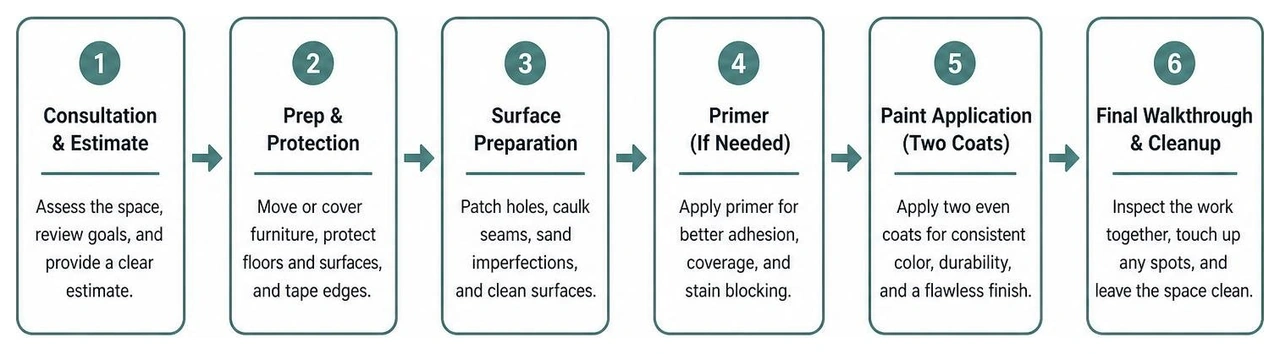
Typically, 60% to 90% of your total bill goes toward professional labor. This covers the crew's wages, project management, and the meticulous prep work required before a single drop of color is applied.
The remaining 10% to 40% covers materials and overhead, which includes:
- Paint and Primer: High-quality coatings tailored to each surface.
- Consumables: Painter's tape, masking paper, drop cloths, caulking, and sanding blocks.
- Equipment and Overhead: Professional-grade sprayers, ladders, scaffolding, worker's compensation, and comprehensive liability insurance.
Reputable contractors can often secure commercial discounts of 20% to 40% off retail paint prices. Rather than buying materials yourself, it is always best to let your contractor supply the paint. This ensures the correct product lines are used and prevents costly delays if more material is needed mid-job.
Regional Cost Variations and Hiring Local Professionals
Labor rates and the cost of doing business vary by region, directly impacting local painting estimates. If you live in areas with a higher cost of living, you can expect professional rates to reflect those local economic conditions.
For homeowners in our service areas—including Charlotte NC, Concord NC, Gastonia NC, Matthews NC, Waxhaw NC, Fort Mill SC, and Indian Land SC—local labor rates align with the regional averages of the Carolinas. When researching the house painting cost charlotte nc, you will find that local rates are highly competitive compared to the national average, making high-quality professional work an accessible home upgrade.
To find the right team for your project, we recommend consulting a local guide, such as our charlotte interior painters guide, to understand what to look for in a licensed, insured, and highly rated local painting company.
Frequently Asked Questions about Room Painting Costs
How many gallons of paint are typically needed for a room?
On average, a standard single gallon of high-quality interior paint covers approximately 350 to 400 square feet with a single coat.
To determine how many gallons a room requires:
- Calculate the total wall area (perimeter of the room multiplied by wall height).
- Subtract the area of large windows and doors (approx. 15 to 20 sq. ft. per opening).
- Divide the remaining square footage by 350 to find the gallons needed for one coat.
- Multiply by two, as professional results always require two coats.
For a standard 12x12 room with 9-foot ceilings, you will typically need 2 to 3 gallons of paint for the walls. If you are also painting the ceiling and trim, expect to need an additional 1 to 2 gallons of specialized ceiling and trim paint.
What is excluded from a standard professional painting estimate?
While a professional quote is highly comprehensive, certain specialized tasks are typically excluded unless specifically requested:
- Hazardous Material Testing: Testing or remediation for lead paint (common in pre-1978 homes) or asbestos.
- Major Structural Repairs: Fixing structural wall settling, replacing rotted wood, or extensive plaster restoration.
- General Contractor Markups: If you are hiring through a builder or general contractor, they may add a 13% to 22% markup to the painter's direct rate.
How can I optimize the cost of a professional room painting project?
If you want to keep your project budget-friendly without sacrificing the quality of the final finish, consider these professional strategies:
- Prepare the Space in Advance: Save on labor hours by moving small furniture, taking down curtains, and removing outlet covers before the professional crew arrives.
- Group Projects Together: Painting multiple rooms during a single visit is much more cost-effective than booking rooms individually, as it allows the professional crew to maximize their setup and dry times.
- Book During the Offseason: Many professional companies experience a slowdown during the late fall and winter months, making it an ideal time to ask about seasonal promotions or flexible scheduling.
Conclusion
Investing in a fresh coat of paint is one of the most impactful ways to elevate your home's comfort, style, and long-term value. While the average cost to pay someone to paint a room depends on the unique details of your space, partnering with a trusted professional ensures a flawless, durable finish that you will enjoy for years to come.
At GW Painting Co., we pride ourselves on delivering exceptional craftsmanship, clear communication, and a stress-free experience for homeowners throughout Charlotte, NC, and the surrounding Carolinas. Whether you are looking to refresh a single bedroom or transform your entire home, our clean, respectful, licensed, and insured crews are here to help.
Ready to bring your vision to life? Explore our interior residential painting services and contact us today to schedule your free, personalized estimate!